CIA Director Ratcliffe’s Moscow Trip May Have Carried a Warning to Putin Over Russian Escalation
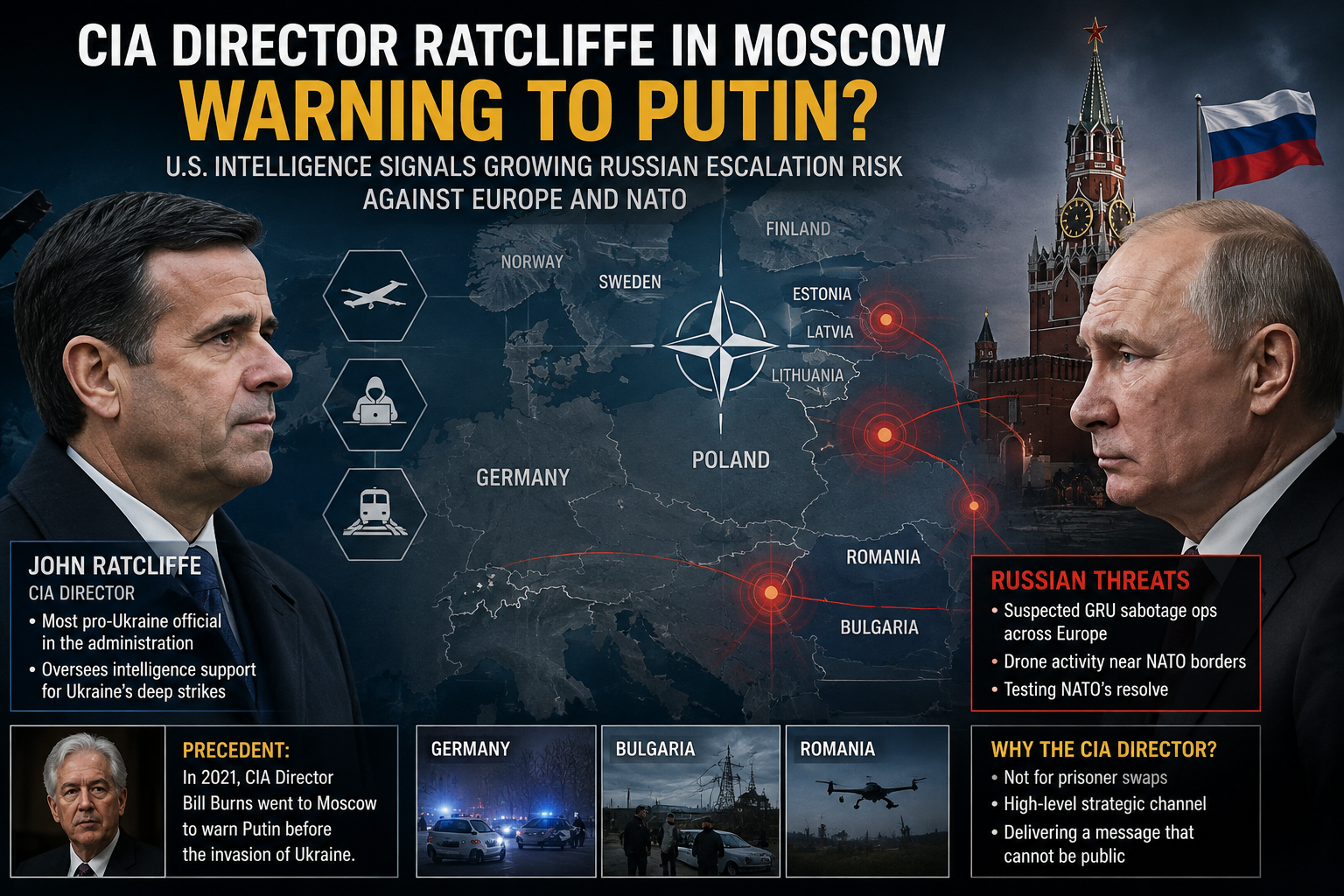
- WASHINGTON — CIA Director John Ratcliffe’s unannounced trip to Moscow on Tuesday has raised questions about whether the United States delivered a direct warning to the Kremlin over possible Russian escalation against Europe and NATO.
Ratcliffe arrived in Moscow aboard a U.S. Air Force C-17 military transport aircraft after travelling via Riga, Latvia. His visit, the first publicly known trip to Russia since he became CIA director, was confirmed by U.S. media citing sources familiar with the matter. Neither the CIA nor the Kremlin has publicly disclosed the purpose of the meetings.
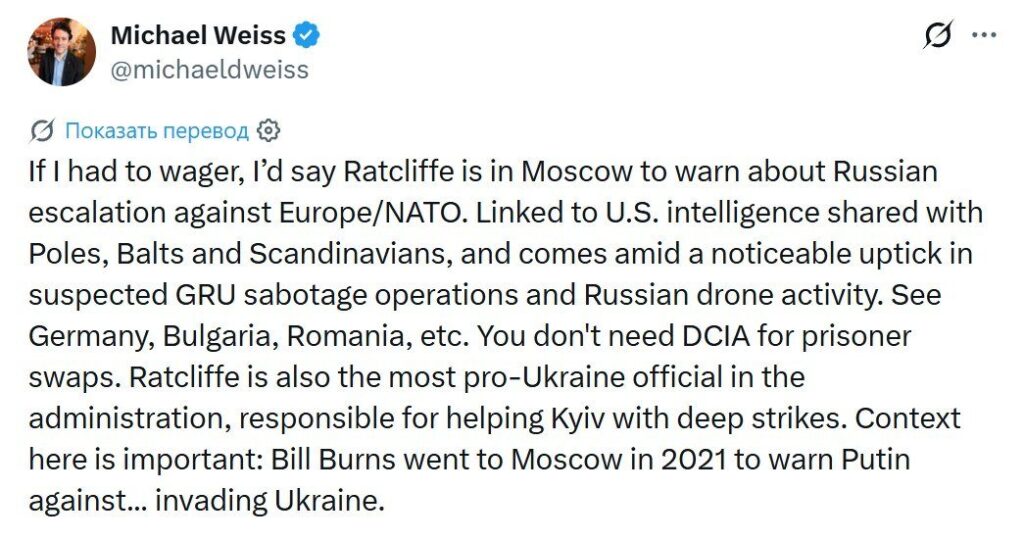
One prominent theory was put forward by American journalist Michael Weiss, an editor at The Insider. Weiss said that, if he had to wager, Ratcliffe was in Moscow to warn Russian officials against further escalation involving Europe and NATO.
Weiss linked the possible warning to U.S. intelligence shared with Poland, the Baltic states and Scandinavian countries, as well as what he described as a noticeable increase in suspected Russian military and intelligence activity across Europe — including alleged GRU sabotage operations and Russian drone activity. He pointed specifically to incidents involving Germany, Bulgaria and Romania.
The theory comes amid growing Western concern that Russia could seek to test NATO’s resolve beyond the battlefield in Ukraine. Recent U.S. intelligence assessments have reportedly warned that Moscow could attempt to challenge the alliance directly in the coming years, while Russian-linked hybrid operations and drone incidents have increasingly raised alarm among European governments.
Ratcliffe’s presence in Moscow is particularly significant because the CIA chief is not normally the official dispatched for routine diplomatic negotiations or prisoner exchanges. Weiss also pointed to Ratcliffe’s unusually strong support for Ukraine and his role in maintaining U.S. intelligence cooperation with Kyiv.
That makes the possibility of a strategic warning particularly notable.
There is also a striking historical precedent.
In November 2021, then-CIA Director William Burns travelled to Moscow and met with Russian President Vladimir Putin and senior Russian officials. Burns delivered a warning based on U.S. intelligence indicating that Russia was preparing for a full-scale invasion of Ukraine. The invasion followed three months later. Ratcliffe’s Moscow trip is the first comparable visit by a U.S. intelligence chief since Burns’ mission.
The circumstances are not identical. Russia is already at war with Ukraine, and the precise purpose of Ratcliffe’s visit remains unknown. Other possible subjects include the war in Ukraine, U.S.-Russian diplomatic contacts, Iran and detainee negotiations. Reuters and other outlets have stressed that neither Washington nor Moscow has publicly described the substance of the meetings.
Still, the timing is difficult to ignore.
Ratcliffe’s visit comes as the war in Ukraine enters another period of heightened tension, with Ukrainian forces conducting increasingly deep strikes inside Russia and European governments confronting a growing number of suspected Russian hybrid operations. At the same time, Washington has reportedly asked Kyiv to avoid strikes inside Russia while Ratcliffe was in Moscow, adding another layer of intrigue to the mission.
If Weiss’s interpretation is correct, Ratcliffe may have travelled to Moscow not to negotiate a conventional diplomatic agreement, but to deliver a private message at the highest intelligence level: Washington is watching Russian preparations closely, its European allies are being briefed, and further escalation against NATO could trigger a much more direct response.
For now, however, that remains an informed assessment rather than a confirmed account of Ratcliffe’s mission.