

New Insight into Mysterious Orb in Buga –Ancient Turkic Runes Unveiled
New Insight into Mysterious Orb in Buga – Ancient Turkic Runes Unveiled
Since the discovery of the mysterious metallic orb over Buga, Colombia, on March 2, 2025, which captured the world’s attention, researchers have been delving deeper into the puzzling object. While much has been speculated about its erratic flight patterns and potential extraterrestrial origins, new revelations are now shedding light on a fascinating detail: the orb is adorned with ancient Turkic runes, a key feature that could reshape our understanding of this enigmatic artifact.
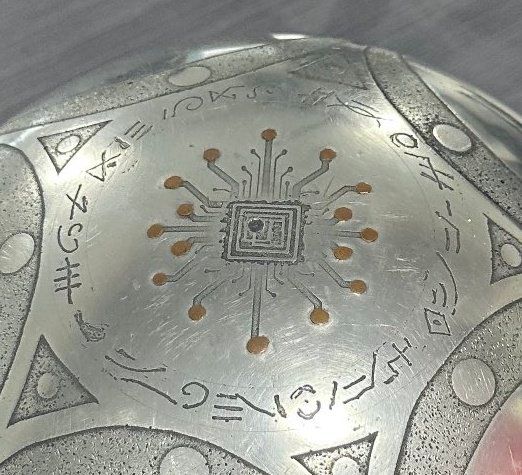
The orb, which measures approximately 30 centimeters in diameter, was first spotted in the sky before it descended into a cornfield. Initial investigations revealed the object was made of a metallic material, possibly silver or steel, with a central geometric design surrounded by 16 dots. However, it is the runes etched on the orb’s surface that are now the focus of attention.
These symbols bear a striking resemblance to Old Turkic—also known as the Göktürk script—used by Turkic peoples from the 8th to 10th centuries. The discovery of these runes on the orb has sent shockwaves through the academic community. The runes, which feature angular shapes such as triangles, hooks, and crossbars, appear to be a form of writing that could provide significant insight into the orb’s origin or purpose.
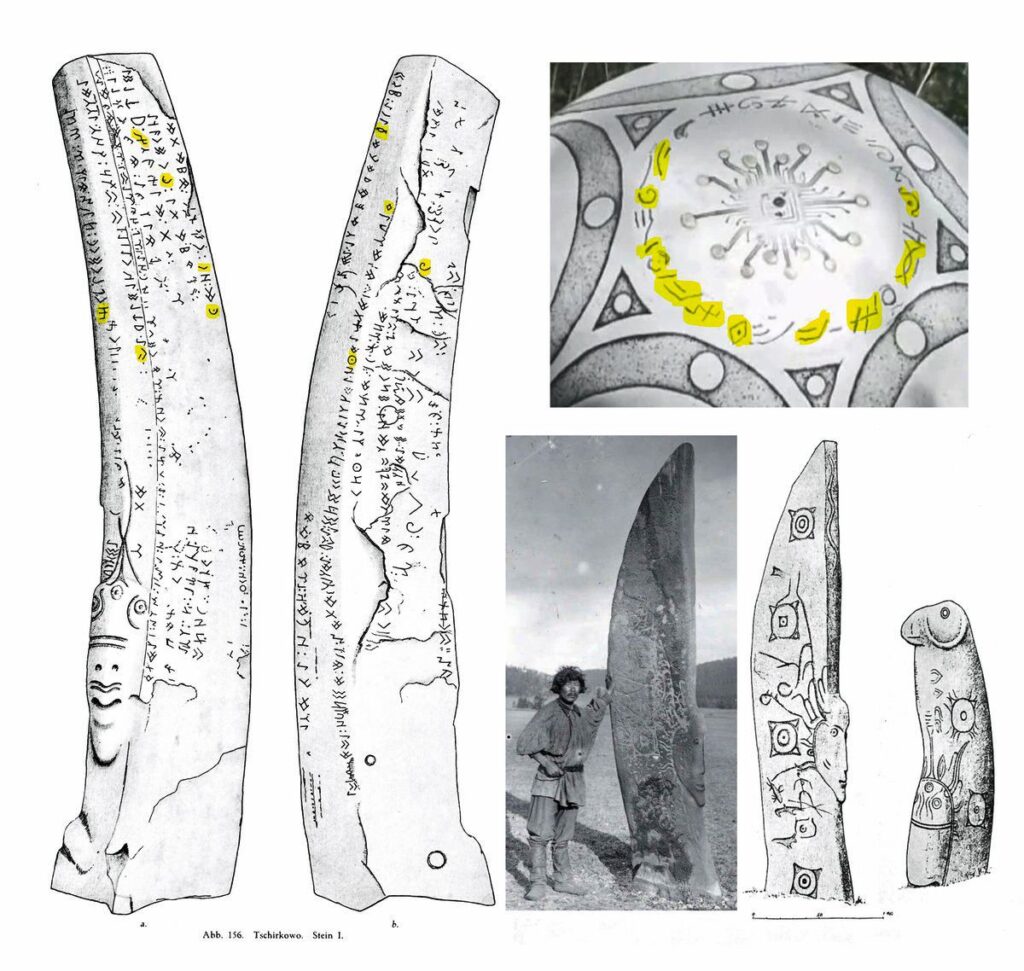
Dr. Horace Drew, an expert in ancient scripts, conducted an in-depth analysis and confirmed the symbols’ similarity to Old Turkic characters. These angular shapes were designed for carving into stone or metal, making them a perfect match for the orb’s surface. According to Dr. Drew, while the exact meaning of the runes is still unclear, it is possible that they represent words, names, or even celestial references tied to the orb’s function.
One of the more intriguing theories now gaining traction is that the orb might be a lunar dial, with the 16 dots surrounding the central geometric grid symbolizing the phases of the moon. This idea aligns with the structure of ancient lunar calendars, which were crucial for the agricultural societies of the past. The runes may be providing additional information on the orb’s intended purpose, potentially as a tool for tracking lunar cycles.

The presence of Old Turkic script raises fascinating possibilities about the orb’s origin. Could it be linked to an ancient Turkic civilization, once spanning vast regions of Central Asia? Or could it point to a more ancient, yet unknown, connection between ancient Turkic cultures and astronomical knowledge?
While the exact translation of the runes remains speculative, early attempts suggest the sequence “akus” could be a name, a title, or a reference to something “pure” or “shining,” perhaps describing the orb’s celestial nature or its visual appearance.
As researchers continue to study the artifact and uncover more about its Turkic script and possible functions, this discovery not only raises questions about the orb’s origins but also about the deep connections between ancient civilizations and their advanced understanding of the cosmos.
Stay tuned for more updates as experts work to decipher the meaning behind the ancient Turkic runes and their link to this captivating mystery. The discovery of these runes has opened a new chapter in the ongoing investigation, one that intertwines ancient writing systems, astronomical tools, and perhaps even a lost civilization.