
U.S. debt hits $36 trillion
U.S. Debt Hits $36 Trillion: Strategic Lever or Looming Threat?
By Alpaslan Duven
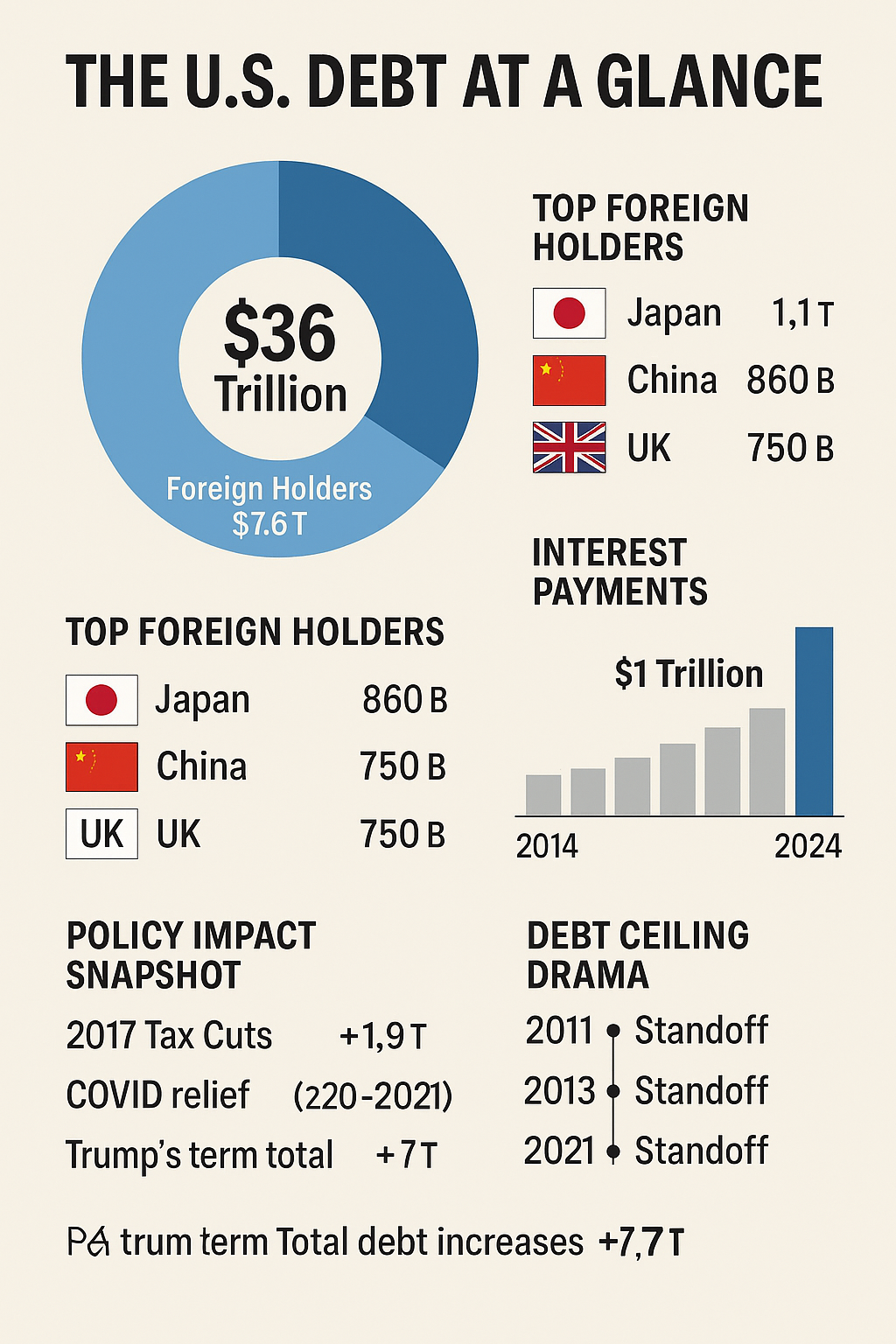
The U.S. national debt has surged past $36 trillion, with more than $7.6 trillion held by foreign creditors, raising fresh concerns over the long-term sustainability of America’s fiscal path.
How did the U.S. reach this point? Who holds the debt — and is this growing burden manageable or a ticking economic time bomb?
Foreign Players and Domestic Policies
The largest foreign holders of U.S. debt are Japan and #China, whose combined Treasury securities account for over $2 trillion. These nations buy U.S. debt because it is seen as the world’s safest asset — a reflection of America’s deep, liquid, and stable financial system.
Domestically, the federal government borrows primarily to cover budget deficits, stimulate growth, and maintain its role at the core of the global economy. U.S. #Treasury bonds are considered so reliable that they underpin financial systems worldwide.
But the cracks are showing.
In 2024, interest payments alone exceeded $1 trillion, a record high. Moreover, growing geopolitical tensions — particularly with China — have prompted some policymakers to worry about the national security implications of foreign-held debt.
#Debt and Politics: A Volatile Mix
Debt has also become a political flashpoint. The 2017 Tax Cuts and Jobs Act, championed by former President Donald #Trump, added an estimated $1.9 trillion to federal deficits. While supporters argued that lower taxes would spark economic growth, critics note that spending cuts never materialized to offset the revenue loss.
Trump-era tariffs generated revenue but damaged U.S. exports, and foreign aid cuts, though headline-grabbing, barely dented the debt.
Over Trump’s four-year term, the national debt grew by more than $7 trillion.
What’s the Bottom Line?
Debt, in itself, isn’t necessarily bad. When used wisely, it can fund innovation, stabilize the economy in crises, and maintain U.S. influence on the world stage. But left unchecked, rising debt threatens to choke future budgets, limit policy choices, and undermine global confidence in the U.S. dollar.
As one analyst put it: “Cutting taxes without cutting spending is a recipe for long-term debt growth — not fiscal discipline.”
With debt ceiling standoffs now an almost annual ritual in Congress, the world is watching. Is #America still the ultimate safe bet — or is it gambling with its financial future?
Graphic coğyrights: Daily Mails