
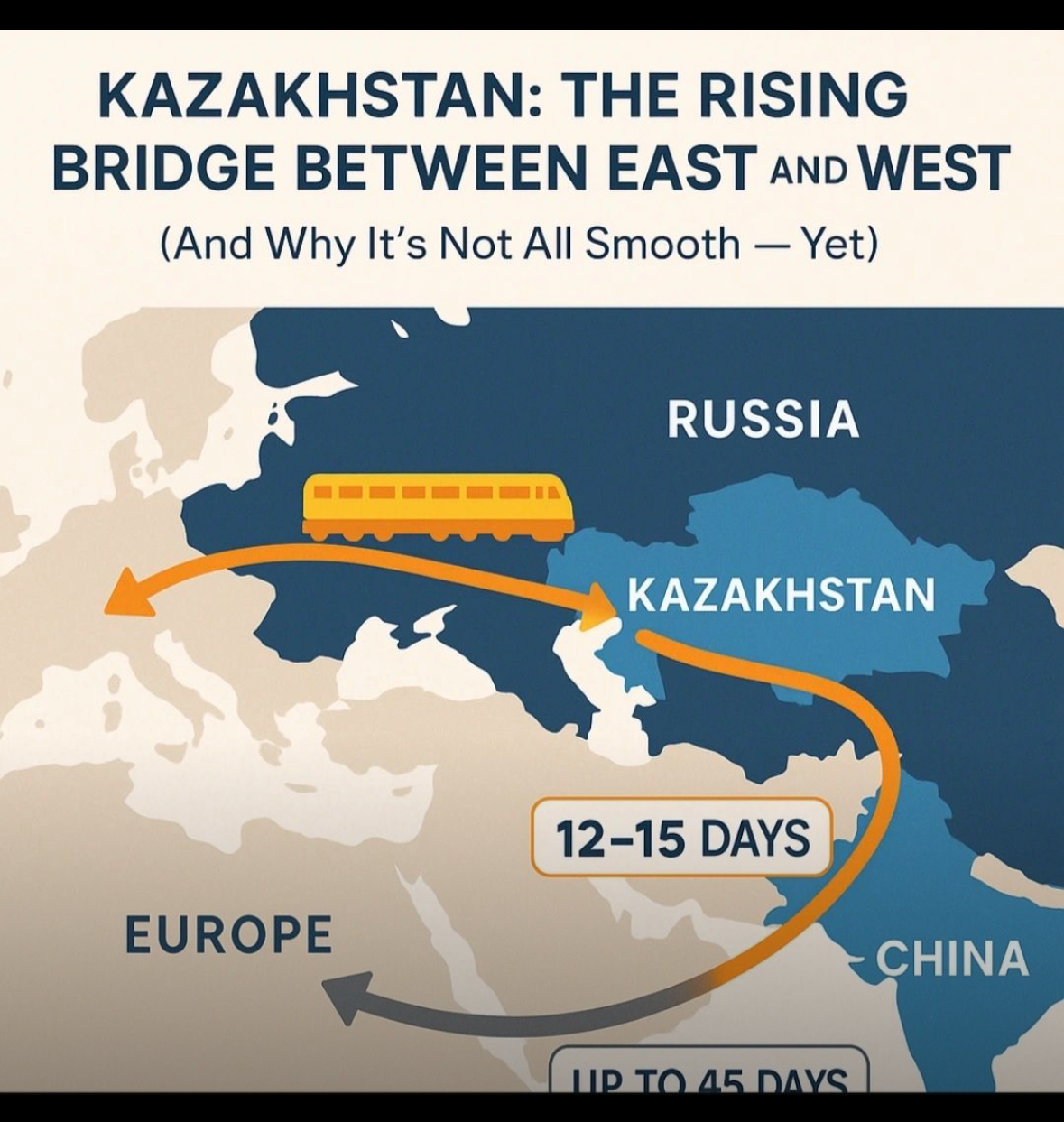
Kazakhstan emerges as a Strategic Logistics Bridge between East and West — but challenges remain
Kazakhstan Emerges as a Strategic Logistics Bridge Between East and West — But Challenges Remain
By Alpaslan Düven
(Daily Mail Business | May 31, 2025
Kazakhstan is rapidly carving out a pivotal role as a logistics corridor linking Asia and Europe — but the road to becoming a global logistics hub is far from smooth.
Strategically located at the heart of Eurasia, Kazakhstan serves as a vital artery in the growing network of overland freight routes connecting China, Russia, and Europe. The country’s geographic position alone gives it a competitive edge, especially in the face of rising global demand for faster, more reliable trade routes.
Rail freight from China to Germany via Kazakhstan can take just 12 to 15 days — a sharp contrast to the 40–45 days required by traditional maritime routes. For time-sensitive sectors such as electronics, automotive, and fashion, this reduction in transit time is more than a convenience — it’s a logistical advantage that translates into real economic value.

Infrastructure and Investment Gains
In recent years, Kazakhstan has stepped up investments in its logistics infrastructure. Major upgrades include the expansion of the Khorgos Gateway — a dry port on the border with China — and the development of multimodal hubs in Nur-Sultan and Almaty. The country is also pushing forward with modernization of its rail networks and implementing more streamlined customs procedures through digital platforms.
The government’s vision is clear: transform Kazakhstan from a transit route into a full-service logistics hub, capable of offering value-added services such as warehousing, assembly, and distribution.
Bumps on the Silk Road
However, not everything is moving at high speed. Logistics professionals and freight operators continue to report several persistent challenges:
-
Border Delays: Bottlenecks at key crossing points can disrupt supply chains and add costs.
-
Infrastructure Strain: While investments are ongoing, parts of Kazakhstan’s logistics network still struggle with capacity limits.
-
Bureaucratic Hurdles: Customs procedures can be slow and inconsistent, with calls for more transparency and efficiency.
-
Geopolitical Risks: Ongoing global tensions, especially involving sanctions and regional conflicts, pose unpredictable risks for transcontinental routes.
Despite these hurdles, many in the logistics sector remain optimistic. “The potential here is huge,” said one regional freight analyst. “Kazakhstan has the chance to evolve beyond just a passageway and become a central player in Eurasian trade.”
Looking Ahead
As trade dynamics shift and companies look to diversify their supply chains away from traditional maritime routes, Kazakhstan’s importance in global logistics will only grow. The coming years will be critical in determining whether the country can fully overcome its challenges and realize its ambitions.
With the right mix of infrastructure development, regulatory reforms, and international cooperation, Kazakhstan is poised to be more than just a bridge between East and West — it could become a destination in its own right.