

Türkiye Among Top Performing Economies in OECD 2025 Outlook
İScreenshot
OECD 2025 Outlook
By Alpaslan Duven
The Organisation for Economic Co-operation and Development (OECD) has released its Economic Outlook, Volume 2025, painting a mixed global picture amid growing uncertainty, subdued investment, and slowing growth — but one bright spot stands out: Türkiye.
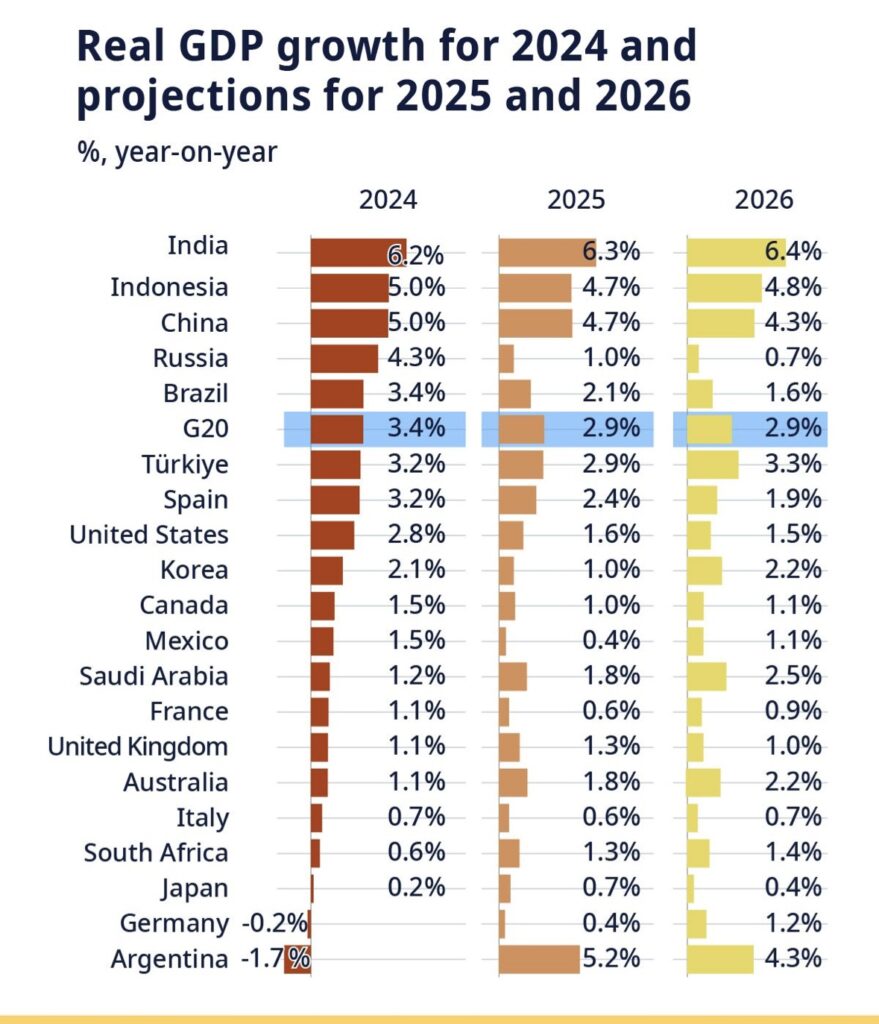
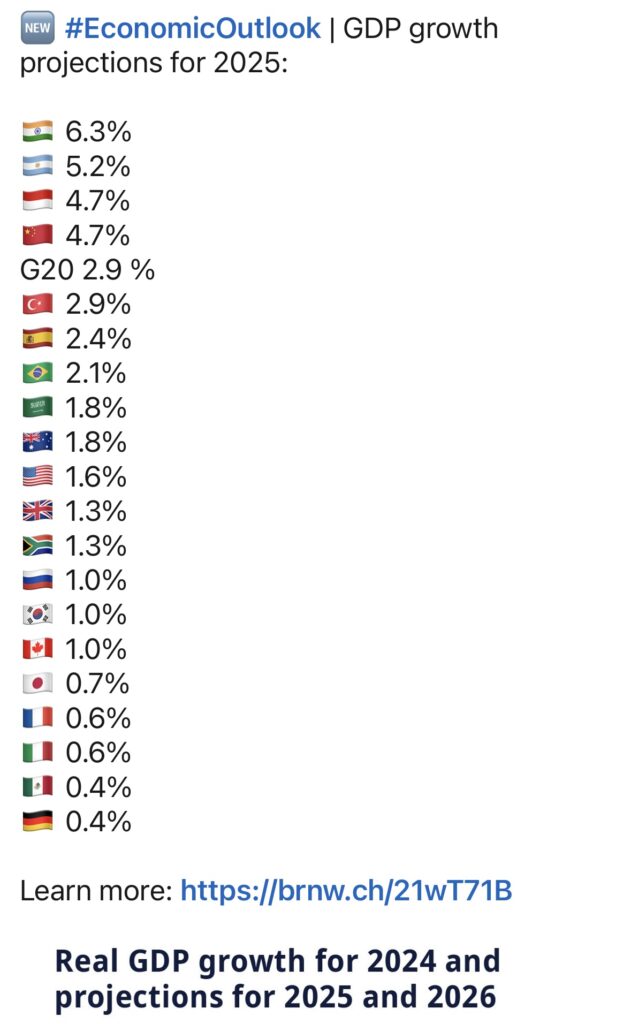
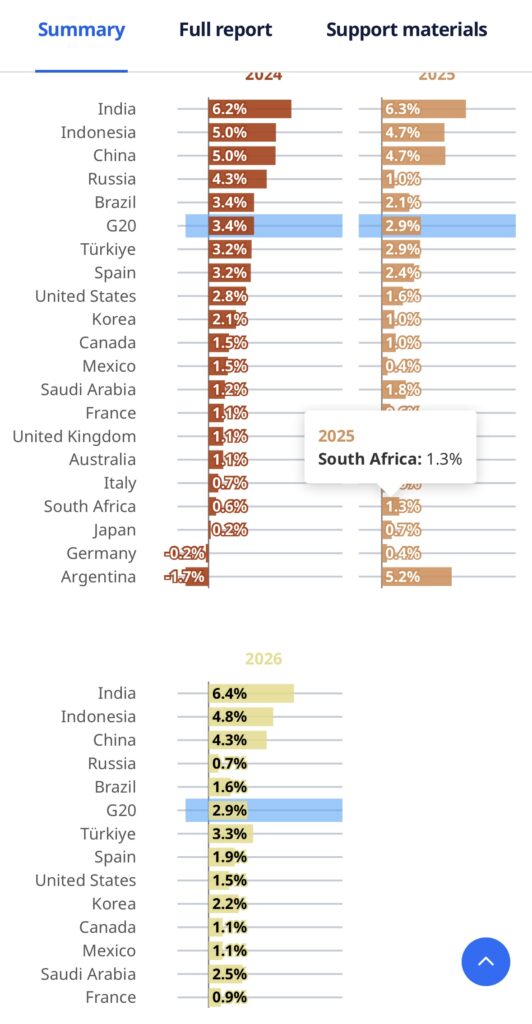
According to the OECD’s projections, Türkiye is forecast to achieve 2.9% GDP growth in 2025, matching the G20 average and outperforming advanced economies like the United Kingdom (1.3%), Germany (0.4%), France (0.6%), and Japan (0.7%). Türkiye’s growth is projected to climb further to 3.3% in 2026, signalling resilience in the face of global headwinds.
Screenshot
Why Türkiye is Surging
Analysts credit Türkiye’s steady domestic demand, expanding regional trade ties, and robust public investment initiatives for its relatively strong performance. In a global environment defined by tight financial conditions, rising trade barriers, and geopolitical uncertainty, Türkiye’s ability to maintain investor confidence and avoid recession is noteworthy.
While major economies like the U.S. and China are seeing their growth projections trimmed, Türkiye is holding steady — offering a rare dose of optimism in an otherwise cautious forecast.
OECD’s Warning Signals
The broader OECD report, however, is less optimistic overall. Global GDP growth is expected to slow to 2.9% in both 2025 and 2026, down from 3.3% in 2024. The report warns that “rising trade costs, tighter financial conditions, and weakened business confidence” are weighing on global momentum.
Persistent inflation — projected to hit 4.2% in 2025 for OECD nations — continues to pressure households and policymakers alike, with warnings that military spending, climate costs, and ageing populations will stretch public budgets even further.
A Call for Smarter Growth
The report urges governments to lower trade barriers, reduce public debt, and rekindle investment to strengthen economic resilience. It also notes that military and defence spending, rising in several OECD nations, may be crowding out critical public investment in infrastructure, housing, and climate resilience.
This raises a critical question: Is the current economic model, increasingly skewed toward defence and short-term stability, sustainable in the long run?
Türkiye’s Position — A Rare Bright Spot
In the context of sluggish performance by advanced economies, Türkiye’s upward trajectory is no small feat. But the challenge remains: can it sustain this momentum while addressing structural issues like inflation, currency volatility, and geopolitical pressure?
As the global economic tide turns more turbulent, Türkiye’s resilience offers hope — and a warning — to others: in times of uncertainty, balanced policy, smart investment, and diversified trade may be the only path to stability.