
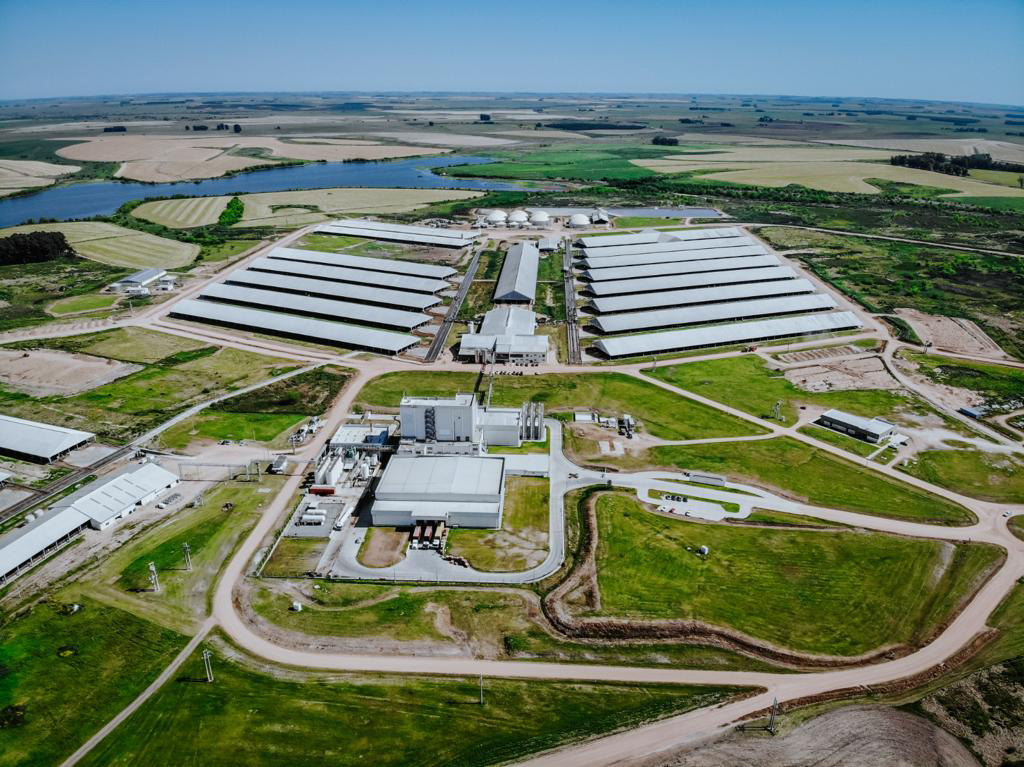
Uruguay bets on the future with the World’s First Electrified Biogas-to-Jet Fuel Plant
Montevideo – July 16, 2025 – Uruguay is poised to cement its place as an unexpected leader in the global energy transition with the announcement of NovaSAF 1, the world’s first commercial-scale plant to convert biogas into sustainable aviation fuel (SAF) using a fully electrified, renewable-powered process.
This ambitious project, developed with U.S.-based Syzygy Plasmonics and U.K.-based Velocys, will be built in the country’s dairy heartland, turning farm waste—a traditional rural economic driver—into 500,000 gallons per year of SAF, a critical tool for decarbonizing aviation.
“This is not just an environmental project. It’s about industry, science, and energy sovereignty,” said Uruguay’s Minister of Industry at the launch event. “Uruguay wants to be part of the global solution to climate change.”
The Technological Heart of NovaSAF 1
Unlike other SAF production methods that rely on green hydrogen from energy-intensive electrolysis, NovaSAF 1 will use advanced photo-reactors powered entirely by renewable electricity to split biogas into carbon monoxide and hydrogen under mild conditions.
The resulting gas is converted into liquid fuels using Velocys’s micro-Fischer‑Tropsch system, a compact, modular approach ideal for decentralized production.
Key advantages:
✅ Near-zero net emissions: capturing methane that would otherwise be released.
✅ Lower capital costs: no need for massive electrolyzers or gasifiers.
✅ Rural adaptability: modular design suits agricultural regions.
A Small Country, Global Impact
Uruguay is already a global renewable energy benchmark, generating over 95% of its electricity from clean sources thanks to a consistent, cross-party policy for more than 15 years. Now it seeks to expand that vision into industry, becoming a green innovation hub for Latin America.
“We are exporting not just products but clean technology and know-how,” noted the National Director of Energy.
The project arrives at a pivotal moment: aviation accounts for roughly 3% of global CO₂ emissions, and without sustainable fuels, its growing traffic will double those emissions.
Under international frameworks like the ICAO’s CORSIA scheme and the EU RED II directive, airlines worldwide will be required to reduce emissions or buy offsets, creating soaring demand for SAF. NovaSAF 1 aims to be the pioneering model supplying that market with local feedstock and clean processes.
Economic and Social Impact in Uruguay
With a final investment decision expected in late 2025, the project promises:
✔ Dozens of skilled local jobs during construction and operation.
✔ A new market for agricultural waste, boosting rural incomes.
✔ Greater energy security and economic diversification.
Syzygy Plasmonics and Velocys emphasize the technology’s replicability, offering a way for other regions to turn organic waste into clean fuel with minimal infrastructure.
Challenges and Open Questions
Despite the excitement, experts warn of hurdles:
Ensuring sustainable, continuous feedstock supply.