
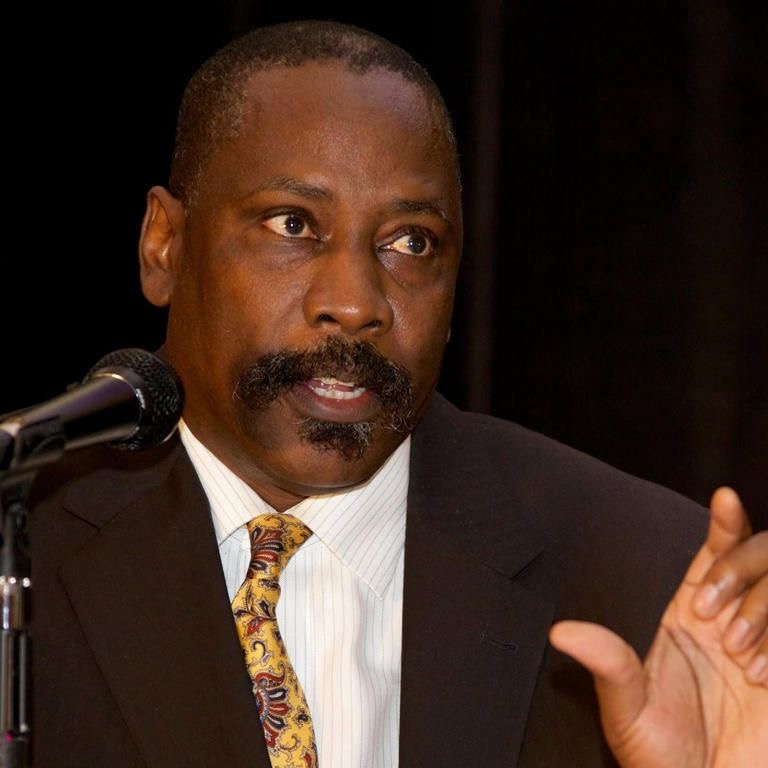
Sudan – The Security Sector Reform
By Dr.Gony Mustafa Shariff
Sudan holds a prominent record of military interventions throughout its history since gaining independence from Britain in 1956. It has experienced numerous military coups and coupattempts. The numbers vary from 15 to 35 coups according to the United Nations Western Europe. These figures include six successful takeovers and failed attempts. Sudan’s coup recordsplace it as the African nation with the most coup attempts. Itranks second globally, just behind Bolivia, which has recorded twenty-three coup attempts since 1950. The Sudanese army was in power for fifty-eight years out of the seventy years of the country since independence. The army’s heavy involvement in governance of Sudan was the reason for the country’s meagre performance and the lack of progress.
There is a fundamental flaw in the structure of the Sudanese security sector, especially the armed forces. Eighty percent of the high-ranking officers descend from a specific ethnicity and region of the country while more than eighty percent of foot soldiers belong to ethnicities from other regions. Historically, this division has always been the case. To create a democratic and a sustainable development program for the country, it isnecessary for the security sector to change and come to terms with the need to abolish this divisive policy.
The Sudanese political parties historically had relationship with the army. The Muslim Brothers of Sudan who took power in 1989 initiated a process that changed the nature of the existing relationship between the army and political parties. The process involved indoctrinating the army into the ideology of the Muslim Brothers’ party under a program known as “Tamkeen” – a process of politically, economically, and militarilyempowering members of the Muslim Brothers to infiltrateaspects of life in the country at the expense of non-party members. That gave the Muslim Brothers the power to prevail and rule the country through controlling the military and the economy.
As a result, for the past thirty-five years, living conditions in the country have deteriorated significantly. The current war between the Sudan Armed Forces (SAF) and the Rapid Support Forces (RSF) raging since the 15th of April 2023 is a culmination to the level of instability the country has been experiencing for decades.
Progress and positive outcomes in the country are unlikely to take place while the war is still raging. A democratic and a civilian government must be installed to replace malpractices such as “Tamkeen” program and embark on nation rebuilding process. Distribution of national resources equitably between all the Sudanese people has never been the practice. Also, there is an urgent need to create a completely new, professional, diverse, and inclusive army assigned to the task of protecting the country’s borders rather than continuing the habit of instigating coups and starting wars for the sake of protecting an ideological group.
The methodology for addressing the security problem in Sudan must clearly involve defining the problem first then finding the solutions. The reality is that Sudan is a failed state that it trails international indices of the United Nations’ sustainable development goals. The current war has further aggravated the situation, and the state performance and constitutional structureshave completely collapsed. Therefore, there is a problem at the state level that requires a state level solution. You cannot just focus on the security sector alone because it is only a part of the problem. The solution rests on reforming the whole state, not focusing on just one part.
Historically, Sudan has put too much emphasis on the security sector by funding it with up to 82% of the state’s budget, leaving little money for other service sectors. In addition, the army washeavily involved in business activities which adversely impacted the private sector by preventing free market competition. One solution to this problem is to allocate less money to the security sector, thereby rebalancing the budget and limiting the army’s corrupt business operations.
Another problem is that the military and the security sectorinvariably act above the law in a manner indicative of superiority. The sector functions as if the law of the land does not apply to it. The civil wars of South Sudan, the Blue Nile, the Nuba Mountains, Dar Fur, and the current war going on since April 2023 have resulted in the death of over three million Sudanese people. There is no record of accountability for war crimes and genocides committed by the army and the security forces over the past thirty-five years. The previous regime of General El Bashir and the current de-facto government in Port Sudan refused to cooperate with the International criminal Court (ICC) and rejected calls for handing over individuals indicted for war crimes. Lawlessness is widely prevalent in Sudan. There is a need to change the laws and create mechanisms for impartial enforceability and compliance. Furthermore, there is a need for the creation of a system that ensures accountability and prevents the military and security sector from acting above the law.
Also, Sudan’s security sector lacks civilian oversight – a long-standing issue during periods of military rule. There is a need to introduce civilian oversight to solve that problem. The professionalism of the military is diminished because of lenient recruitment standards that permit the entry of unqualified individuals. Recruiting is based on favoring certain ethnicitiesby accepting them in Sudan’s Military College and advanced security sector programs to fill leadership positions after graduation. People from the regions of Kordofan and Dar Fur in Western Sudan are frequently recruited for foot soldier roles.The result is a skewed composition of cadres resulting in an unprofessional and deformed security sector. So, ensuring the right intake by changing the procedures and offering proper training is the first step to solving the problem.
A thorough examination of senior positions in the security sectorleads us to the conclusion that the sector is not only non-inclusive, but also ethnically exclusive by design. It is an unshared club dedicated for a small fraction of the Sudanese population. To address that problem, there is a need to put moreemphasis on the right intake based on merit not on ethnicity or family connection and by introducing more rigorous promotions that are based on merit.
There is also the problem of too many people employed in the security sector and high operation costs. Rampant unemployment has led to school dropouts seeking jobs in the security sector. Making soldiers unemployed may lead to other bigger problems. The solution is to find alternative employment and that is a whole state solution. Creating more reserve forces and implementing policies that ensure dignified exits with employment prospects may reduce the number of people in the security sector.
There is genuinely a shared deep rejection of the current army – the SAF, deep rejection of how it operates, deep criticism, and disapproval of its composition. The answer to that is equally a deep and a profound chance to address that problem, which brings us to the significant question: Do we begin with nothingor find a way to identify specific problems that exist and address them?
This presents a significant dilemma, as each option entails certain risks. The risks of somehow starting from nothing, as shown in the case of Iraq’s experience, may lead to undesired consequences. Telling the army “I’m going to eliminate you”may cause the army to reciprocate with the same statement “I’m going to eliminate you.”
International examples of security sector reform offer valuable lessons. Nigeria is one example worth considering. Military rule in Nigeria lasted for twenty-nine out of the first forty years of the country’s post-independence history. This period, from 1966 to 1999, saw multiple military coups and transitions back to civilian rule. The security sector reform in Nigeria started with a decisive moment in the history of the movement. The military,during the periods it was in control, was being excessive and unacceptable in their behavior. At the same time, pressure from the international community and civil society, which was becoming increasingly active and decisive, helped create the right conditions for transitioning to civilian government.
The military was compelled to transform its mindset, mentality, and behavior through a process known as community reconciliation. The Nigerian military had to adjust their approach. For instance, military officers may be involved in street cleaning operations, prohibited from using public transportation for free, or sent to other countries to observe democratic processes. Civilian oversight committees gained access to military barracks for account and record reviews. So,these efforts were not only about changing the attitude of the military but also changing their behavior. The civil society in Nigeria was specialized in focusing on specific issues rather than broad ones. For instance, the term “Civil Society Diamond” was employed as an analytical instrument to engage with civil society organizations (CSOs). It identifies four key dimensions of civil society: socioeconomic/structural, legal/constitutional, normative/value-related, and functional/impact-related. This tool facilitated communication and comprehension among individuals affiliated with civil society organizations (CSOs).
So far, Nigeria has had twenty-five years of uninterruptedcivilian rule, but corruption is still a problem. Modifying this perspective necessitates a significant investment of time and cannot be resolved expeditiously.
Iraq is another example for security sector reform that was questionable because some people accept it, and others do not. The de-Baathification in Iraq has caused unintended consequences because it has collapsed the institutions of the state not just changed the personnel of the security sector. It devastated the very fabric of the state and that had led to greater insecurity and unintended consequences. Also, the Iraqis focused more on the military reform but not the police, so the approach was a partial rather than a wholistic reform.
Certain experiences related to the Middle East are specific to Sudan, whereas others are not. The Defense and Interior Ministers do not need to be from the Army or police force, respectively. The military’s argument that civilians cannot be in charge because they do not understand the nature of the army is not acceptable. Minsters of defense do not have to be soldiers. In Tunisia, for example, the minister of defense has always been civilian. The same way, one does not have to be a doctor to be a minister of health or a teacher to be a minister of education.
In most Middle Eastern countries, there is a limited external oversight of the security sector, particularly in the form of robust parliamentary committees or regulatory bodies. However, thereis internal oversight that comes in the form of inspections of audits and control of the inner operations of the security sector, and that is a good starting point for reform.
Security sector reform was considered for implementation in Sudan between 2019 and 2021. The 2021 military coup took full control of the government and undermined that idea. The war of April 15th, 2023, which is still raging, has squandered any chance for security sector reform for the time being.
The transitional government formed after the revolution of 2019had both military and civilian components. The military sector was the one that hindered security reform talks. They were reluctant to fully embrace the idea. Observers believe that the army executed the 2021 coup to prevent the civilians from taking control of the government, hence hinder them fromintervening and restructuring the army. The current war is in its third year, and the SAF has weakened. The army resorted to forming new militias to replenish soldiers lost in the war. The proposition of integrating the RSF into the remnants of the SAF is currently problematic and impractical due to the shift of power away from the SAF.
Therefore, any idea, other than building a new army from scratch is a redundant one and a futile exercise. Building a new security sector is the only safeguard for ending Sudan’s perpetual wars, otherwise the instability of the country will be the guaranteed outcome.
In conclusion, as we have explained above, there is historically a serious flaw in the structure of the Sudanese security sector. If we are to create a progressive civilian and democratic system in Sudan with the aim towards a sustainable peace and stability, it is important to have an army that believes and adopts these principles.
Besides, the “Tamkeen” practice within the security sector must be abandoned. The creation of a new and a professional army subject for oversight by a democratically elected civilian administration is the way out of the abyss the country has beenin since its independence from Britain. Kenya and Tanzania are two bright examples of countries within the region that had successfully built their army from scratch.
Dr. Gony-Mustafa Sharif
Deputy Chairman
Sudan International Contact Group (SICG)
References:
Sudan Security Sector reform workshop, Kampala, April 2024, Dr. Gony Mustafa Sharif
https://mepei.com/what-is-behind-the-clashes-between-rapid-support-forces-and-the-sudanese-army/
https://merip.org/2021/12/the-evolution-of-sudans-popular-political-forces/
https://nubareports.org/sudans-economy-annual-budget-designed-for-war/index.html
https://africacenter.org/spotlight/security-sector-stabilization-a-prerequisite-for-political-stability-in-south-sudan/
https://africanleadershipcentre.org/attachments/article/370/A%20Fasakin%20State%20and%20Democratisation%20in%20Nigeria.pdf