
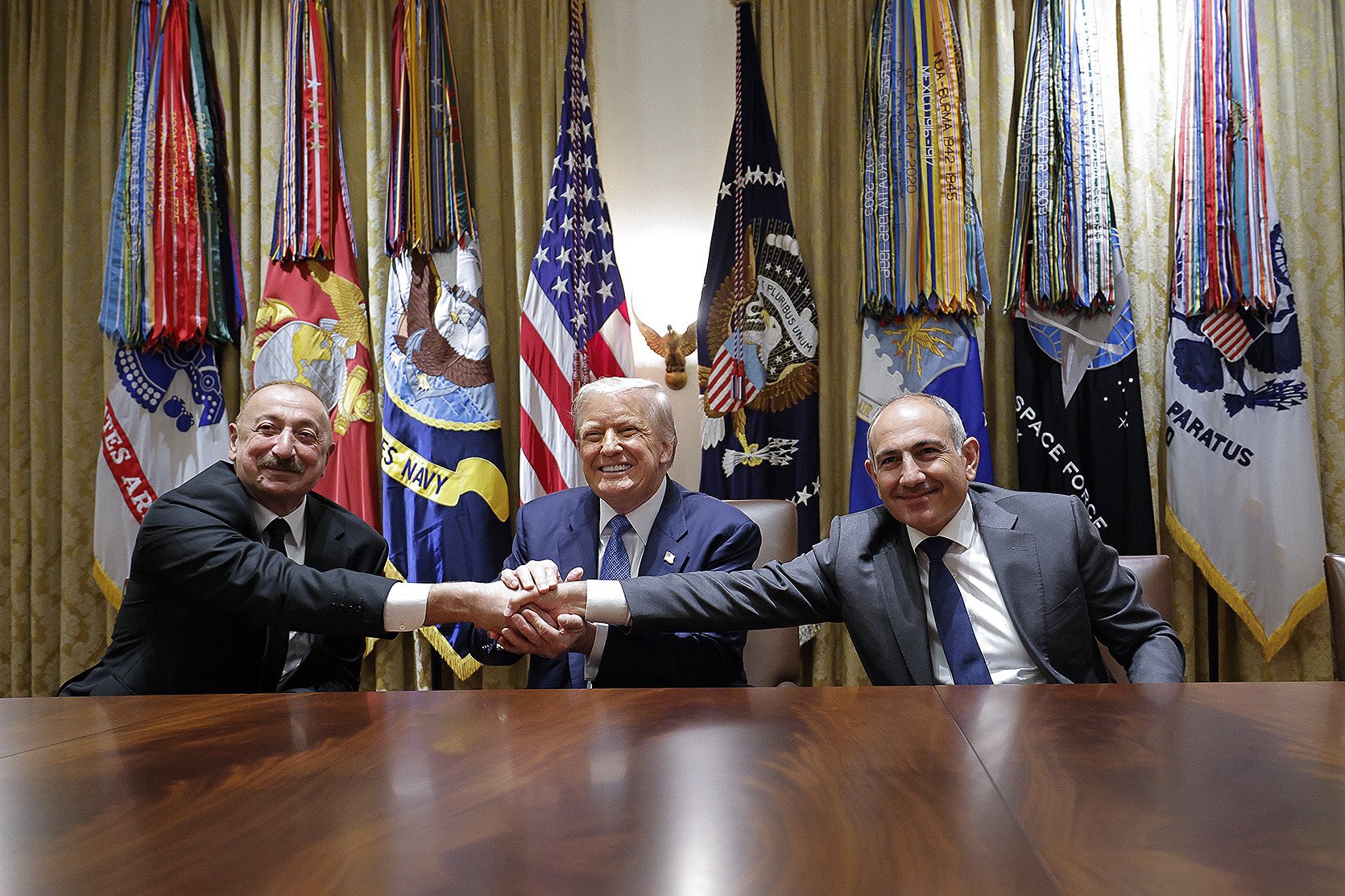
Historic Armenia–Azerbaijan Peace Deal
İWashington, D.C. — In a landmark diplomatic breakthrough, the United States has brokered a historic peace agreement between Armenia and Azerbaijan, signed today at the White House. The deal marks a formal end to decades of hostility and opens a new chapter of political, economic, and infrastructure cooperation in the South Caucasus.
Under the agreement, Armenia will normalize diplomatic relations with both Azerbaijan and the United States, securing a new U.S. economic partnership and the promise of potential infrastructure investments. The deal helps Yerevan avoid further isolation in the region and reduces the risk of future large-scale military conflict. Armenia will also retain sovereignty over the Zangezur Corridor but has agreed to lease its development rights to the United States for 99 years.
Azerbaijan emerges with a major diplomatic win, as Washington waives Section 907 of the Freedom Support Act — paving the way for direct U.S. military cooperation. The deal strengthens Baku’s territorial continuity through access to the Zangezur Corridor, while shifting its peace process away from Russian and OSCE mediation. Azerbaijan will also benefit from U.S.-led infrastructure investment in strategic transit lines.
For the United States, the agreement represents a rare foreign policy victory in a volatile region, bolstering American influence while countering Russian and Iranian presence in the South Caucasus. Washington gains exclusive development rights over the strategically vital corridor connecting Europe to Asia, branding the project under President Trump’s “TRIPP” (Trump Route for International Peace and Prosperity) initiative — a move seen as both a geopolitical and political win.
The signing ceremony capped months of negotiations and is being hailed by all three sides as a turning point for stability, economic integration, and reduced tensions in the region.