Global Finance and Shadow Banking Networks
Shadow Intel
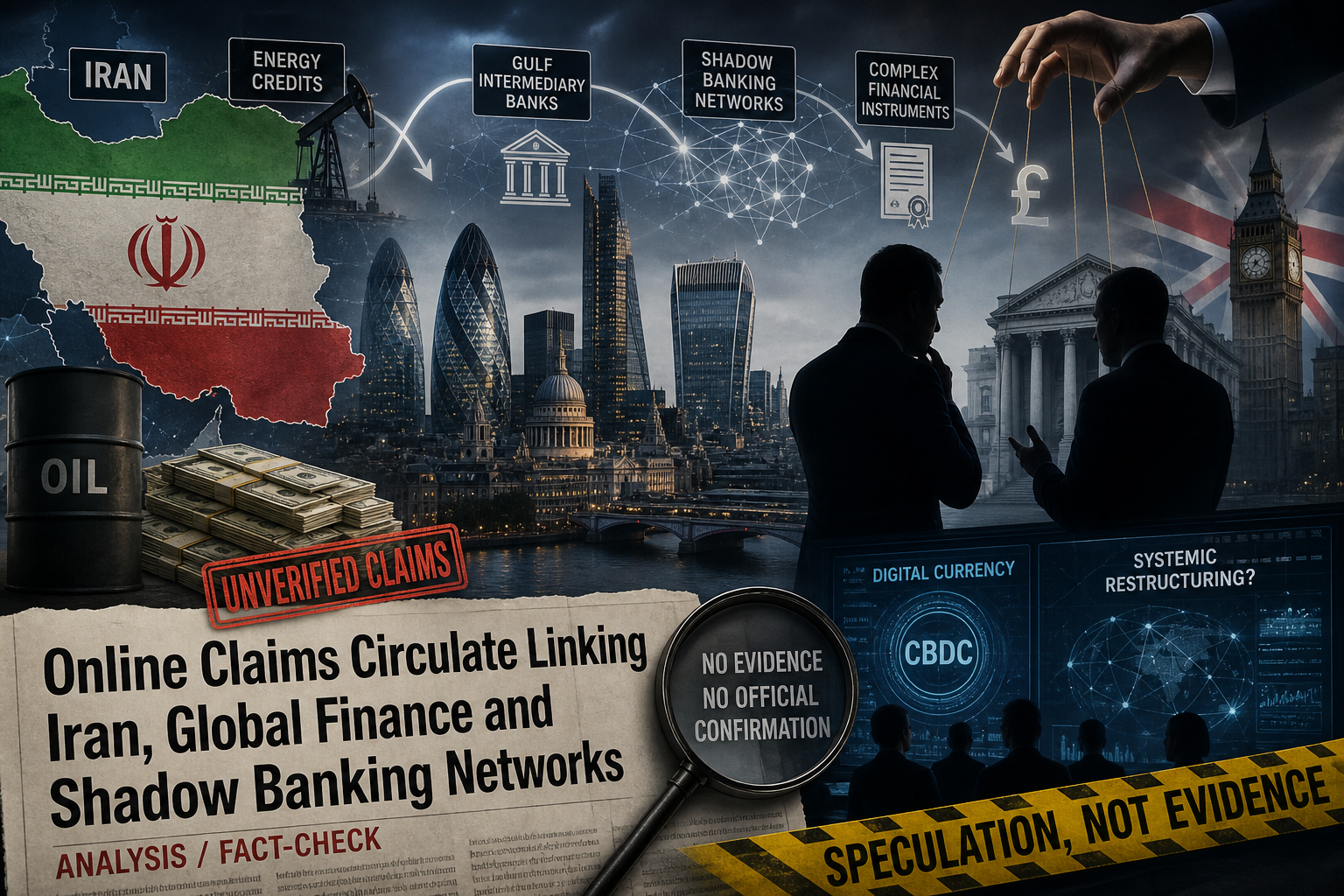
Iran is a primary source of liquidity for the shadow banking system, describing London as a central hub and Tehran as an offshore component within this network. It claims that energy-related credits linked to Iran are exchanged through intermediary banking channels in Oman, then bundled into financial instruments and used as collateral in London-based short-term lending operations.
It further asserts that this flow of financial instruments supports leverage in major financial centers, and that disruption of this system would affect liquidity conditions in the City of London.
The text also describes a projected geopolitical scenario referred to as a “2026 Iran war,” which it frames as a reflection of divisions among global elite groups. It categorizes these groups into two factions: one described as traditional banking interests seeking to maintain existing financial structures and continuity of current systems, and another described as technology-sector interests allegedly supporting systemic financial restructuring through digital currency-based ledgers.
Additionally, the text claims that sanctions function as mechanisms regulating access to global financial systems and that only a limited number of major banking institutions are positioned to handle large-scale transactional flows.
It further states that developments involving Iran’s financial system could influence global liquidity conditions and that certain infrastructure systems could be affected in the event of systemic disruption.