
Colombia in the Spotlight of the World’s Most Powerful

Colombia in the Spotlight of the World’s Most Powerful
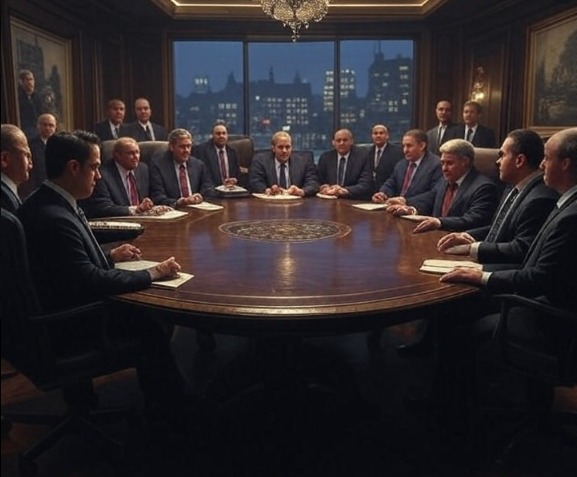
The Bilderberg Club, composed of the world’s most powerful elite, makes decisions, promotes changes, and elevates presidents. Founded in 1954, the Bilderberg Club is anannual meeting attended by approximately 150 of the most influential politicians, intellectuals, bankers, and business leaders in the world.
Initially, the club’s purpose was to strengthen ties between European countries and the United States to jointly combat the Soviet Union and communism. However, after the fallof the Berlin Wall, its objectives shifted.
Among its regular attendees have been members of royal families, senior officials frommultilateral economic organizations such as the International Monetary Fund and the WorldTrade Organization, as well as presidents of major banks.
Their meetings take place in luxurious locations in Europe and North America, undercomplete secrecy. Despite the attendance of many opinion leaders and owners of the world’s most prominent newspapers, they never issue statements about the discussions orconclusions reached. The reasons they give for this secrecy are supposedly to ensure the informality of the discussions, which requires the utmost confidentiality. This secrecy has led many to believe that the club makes decisions about the world’s future.
Critics of the Bilderberg Club claim that its participants decide on starting and ending wars, set oil prices, and trigger and control economic crises.
However, members of this exclusive and highly secretive club have always maintained thatthe Bilderberg Group is not a conspiratorial organization seeking world domination, butrather a private forum where the most prominent leaders of the global economiccommunity and select politicians share experiences.
Beyond conspiracy theories, these meetings raise significant suspicions because theirattendees wield immense political and economic power.
While it is unlikely that the Bilderberg Club acts as a shadow government, it is quite plausible that important decisions are made there, at least to benefit the economic and political interests of its participants.
There is substantial evidence that the powerful members of the Bilderberg Club influencegovernments worldwide.
Social Capitalism
The term “social capitalism” was coined in 1947 by Alfred Müller-Armack to express the idea of a future economic order for a Germany devastated by World War II, where the market would be the backbone of an economy guided by social criteria for the well-beingof its people.
It was necessary for Germans to return to a liberal economic model that allowed growthwhile avoiding the mistakes that led to Germany’s decline and the devastating war thatfollowed.
Gradually, social capitalism spread to many cities, regions, and countries, increasingproductivity and competitiveness, reducing costs, and accelerating learning and knowledge, making societies less unequal.
However, social progress goes further, as it seeks to meet citizens’ basic needs, improvetheir quality of life, and create conditions for everyone to reach their full potential.
Social capitalism fosters harmony between economic development and social progress, a relationship that should be seen as a two-way street. It is proven that economic growth doesnot necessarily lead to social progress, but social progress is always a driver of economicprosperity.
The progress derived from social capitalism enhances people’s daily lives: in health, education, economic well-being, more opportunities, environmental care, and the achievement of social and political rights in societies where happiness is perceived.
The Bilderberg Club promotes the advancement of social capitalism.
It is said that the leadership of Mikhail Gorbachev, the Russian who brought down the Soviet Union and ended socialism, was orchestrated by the Bilderberg Club, with supportfrom the German Joseph Aloisius Ratzinger, who became Pope Benedict XVI, and the charismatic American actor Ronald Reagan, who was propelled to the presidency of the United States.
It is also believed that they paved the way for Vladimir Putin to take control of Russia, where he has been maintained to prevent the resurgence of pro-communist socialism in thatvast country.
After the collapse of socialism, all former Soviet republics adopted social capitalism. The most successful nation is Azerbaijan, a thriving and wealthy country that has become a paradigm of a strong society in all aspects, particularly in social matters: Azerbaijan, withjust over 10 million inhabitants, has 55 registered political parties (of all ideologicaltendencies) coexisting harmoniously, all committed to promoting the development and strengthening of a country where people’s well-being prevails.
However, Cuba remains stagnant, clinging to an outdated socialist system, which wouldchange once Raúl Castro and the elderly Fidelistas pass away. I met Miguel Díaz-Canel, who is fond of capitalism, and I assume he will one day steer the island toward social capitalism.
In Latin America, Hugo Chávez presented himself as a social-democratic capitalist and wassupported to rise to power, benefiting from oil price increases. However, Chávez veered off course, revealing himself as a socialist, behaving like a Latin emperor. This led toplummeting oil prices, triggering economic impacts that affected social conditions, causingthe “Bolivarian Revolution” to stagnate, performing as badly or worse than the Cuban regime.
A Colombian President for Social Capitalism
A Colombian president, backed by the Bilderberg Club, would be someone who projectsreconciliation, engages with opponents, and acts as a statesman seeking governance in a highly polarized Colombia.
Colombians need a president like Pipe Córdoba—humble, not confrontational but unifying, a negotiator rather than a provocateur, with the mental openness to reach agreements and a commitment to establishing and developing social capitalism.
Pipe is intelligent, cultured, and well-prepared enough to align with the sociopolitical and economic intentions promoted globally. If so, he would gain significant support from the IMF and major investors who encourage collaborations at the World Economic Forum, oneof the public arms of the Bilderberg Club.
To the world, Colombia is a powerhouse, especially in water resources, ecologically nearlyintact compared to most nations, making its territory globally strategic.
In our world, with 195 countries and over 8 billion inhabitants, nothing happens by chance; everything is carefully calculated, planned, and promoted.