UK awards £1.5bn forces recruitment contract to Serco amid questions over spending priorities
By Alpaslan Duven
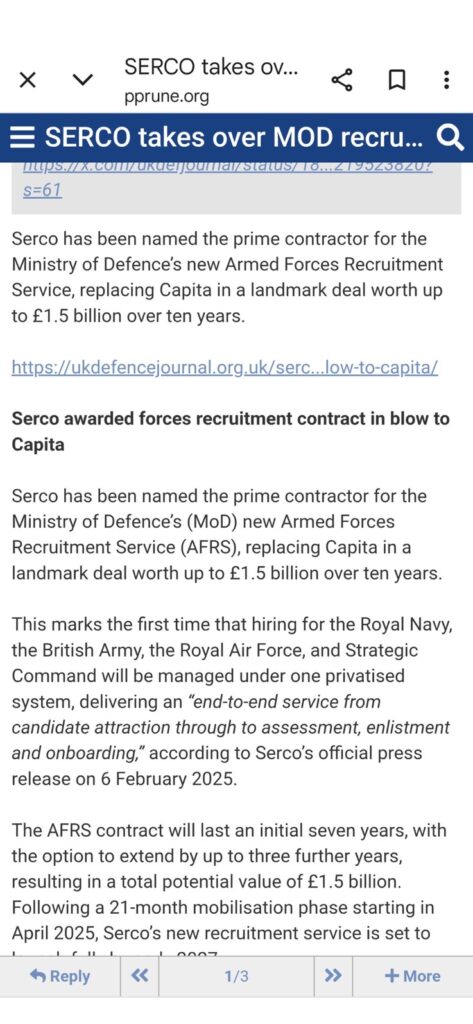
The UK government has handed a lucrative contract worth up to £1.5 billion to outsourcing firm Serco to run the #Armed #Forces #Recruitment Service (AFRS),marking a major shift in military hiring and a significant blow to current contractor Capita
Announced in February 2025, the deal will see Serco take over recruitment for the #Royal #Navy, #Army, Royal Air Force, and Strategic Command in a single, centralised system.The contract spans an initial seven years, with an option to extend for three more
Serco promises a full-spectrum approach—from advertising to assessment and onboarding—aiming to “modernise and streamline” military recruitment. The 21-month mobilisation phase begins this April, with full implementation expected by 2027.
But as the UK prepares to pour billions into military recruitment and defence procurement, critics are questioning whether this is the right investment at the right time.
“Preparing for War”?
Prime Minister Keir #Starmer recently declared, “We must prepare for war”, in what many saw as a dramatic shift in rhetoric. While government officials frame the #AFRS overhaul as part of broader modernisation efforts, some see it as a worrying sign that the UK is drifting toward a more militarised agenda.
“Why are we spending billions on guns and recruitment pipelines while our NHS is crumbling, schools are overcrowded, and families are struggling to heat their homes?” asked MP Zara #Malik (Green Party), who has called for a public review of defense procurement.
Lessons Not Learned?
Capita, the company being replaced, faced years of criticism over delays, missed targets, and poor public perception. But critics warn that Serco doesn’t come without baggage—its track record includes controversial roles in immigration detention and public service outsourcing.
“This looks like the same outsourcing model, just with a different name on the invoice,” said Dr. Jacob Hines, a defence analyst. “If the core problems are about recruitment culture and public trust, a billion-pound contract won’t fix that.”
Strategic or Symbolic?
The MoD insists the move is part of building a “leaner, smarter” armed force for an increasingly unpredictable world. But to many, it feels like a symbolic show of toughness, rather than a strategic necessity.At a time when the UK faces no immediate military invasion, some argue the threats that matter most—cybersecurity, misinformation, climate instability—can’t be solved with more soldiers and software contracts
The Bigger Picture
In the global arms race, defense budgets are rising across Europe, often at the expense of domestic social spending. The Serco contract may be just the latest sign of a government betting on militarisation over meaningful reform
Whether this investment will strengthen national security or simply funnel more public money into private hands remains to be seen