
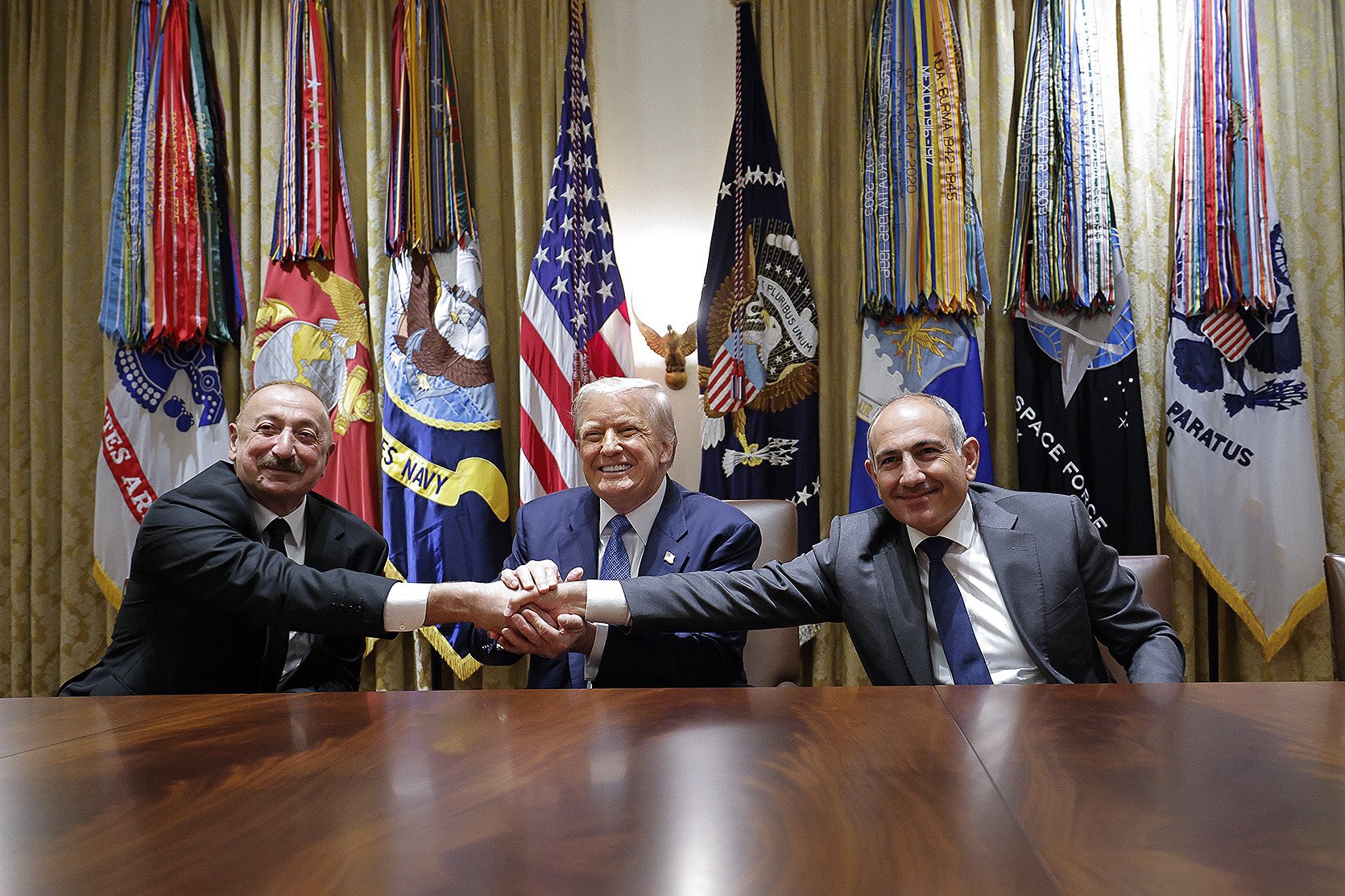
Trump hosts historic Peace Deal between Armenia and Azerbaijan at White House
Trump Hosts Historic Peace Deal Between Armenia and Azerbaijan at White House
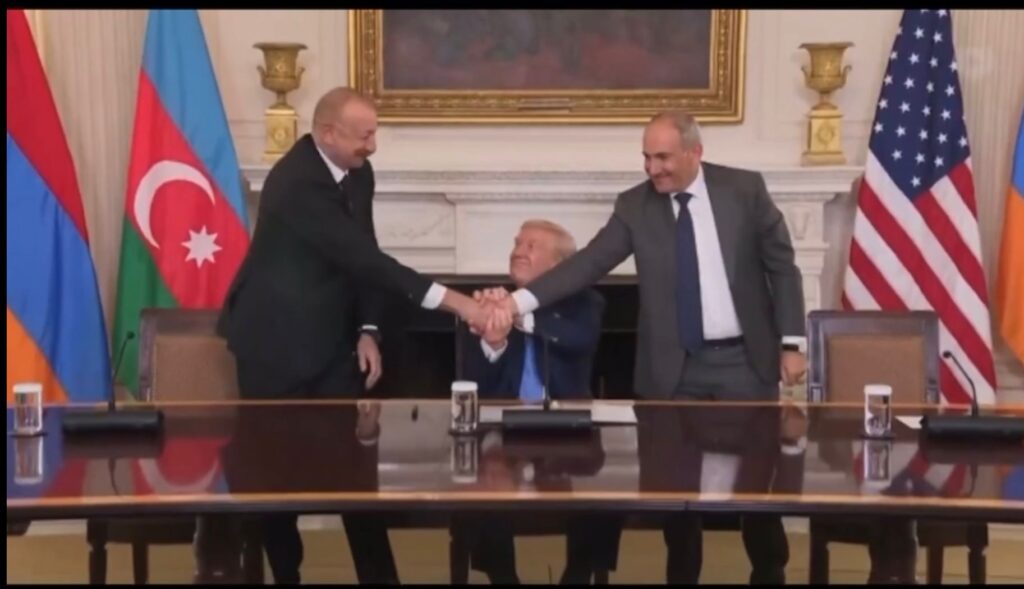
WASHINGTON — Armenia and Azerbaijan have signed a landmark U.S.-brokered peace accord at the White House, ending decades of hostilities and opening the door to closer economic and diplomatic ties.
President Donald Trump welcomed Azerbaijani President Ilham Aliyev and Armenian Prime Minister Nikol Pashinyan to the signing ceremony on Friday, describing the agreement as a “historic step” after more than three decades of conflict.
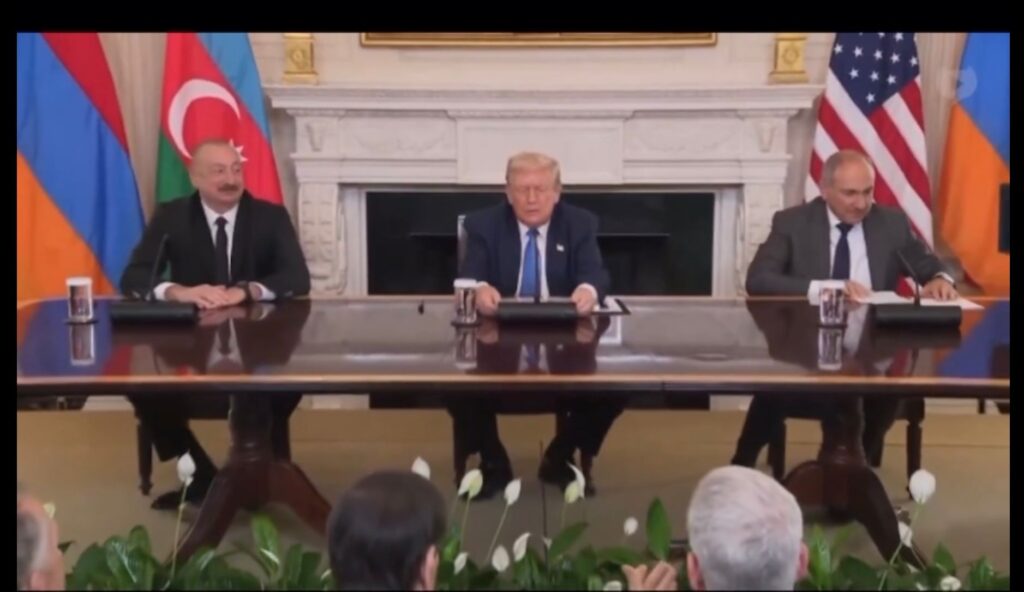
“This is a new chapter,” Trump said. “They fought for 35 years, and now they will be partners — and friends — for a long time to come.”
The deal commits both nations to cease hostilities, recognize each other’s borders, and establish formal diplomatic relations. It also grants the United States exclusive development rights to a key South Caucasus transit route, intended to expand the flow of energy and goods across the region.
Washington will also deepen cooperation with each country in sectors including energy, trade, technology, and artificial intelligence. Restrictions on U.S.-Azerbaijan defense ties have been lifted under the new agreement.
Aliyev and Pashinyan both praised Trump’s role in mediating the breakthrough, with Aliyev stating that the U.S. president deserved consideration for the Nobel Peace Prize.
The Armenia-Azerbaijan rivalry traces back to the late 1980s, when the predominantly Armenian-populated Nagorno-Karabakh region declared independence from Azerbaijan. The conflict flared repeatedly over the years, culminating in Azerbaijan regaining full control of the territory in 2023, which triggered the mass departure of ethnic Armenians from the area.
U.S. officials say the agreement is the first settlement of a long-frozen conflict in Russia’s neighborhood since the Cold War, a move likely to unsettle Moscow, which views the South Caucasus as part of its sphere of influence.
The Trump administration has touted the deal as part of a broader diplomatic push that has also included ceasefire arrangements in Southeast Asia and peace initiatives in Africa and South Asia. However, significant challenges remain, including unresolved conflicts in Ukraine and the Middle East.
Analysts say that if implemented successfully, the accord could reshape the South Caucasus — a strategically vital, energy-rich corridor between Europe and Asia — and open up long-closed borders in a region historically marked by rivalry and mistrust.
If you want, I can also create a condensed wire-service style version for quick publication that keeps it under 300 words. That would make it ready for fast news syndication.