
Polarization or Us
It’s not that we think differently—that’s always existed. It’s disastrous when we divide into factions that don’t want to understand each other and hate each other. Polarization is when you see someone who votes differently and think, “That person is wrong, there’s nothing to discuss.” This has become so common that sometimes it seems like we live in different countries: that of “some” and that of “others.” And in between, many have decided they prefer not to get involved, not to vote, not to have an opinion. ¿After all, Why?
The fuel for polarization is the idea that there are no shades of gray, only black and white. Social media has added fuel to the fire. Every time you log on to X, Facebook, Instagram, or Tiktok, the algorithm shows you what you already believe, and makes you feel comfortable. If you follow accounts that criticize a certain politician, guess what: they’re going to show you more of the same. And on the other side, someone is seeing the opposite content. So we lock ourselves in bubbles where some people think like us, and those who don’t, ¡are in bad shape!
Today, politics is like a soccer game where the teams always tie, but everyone ends up losing. Why? Many feel it makes no difference: whether you vote or not, things don’t change. Corruption persists, and campaign promises remain in the air.
Polarization has made us feel that participating is pointless, because in the end, it all comes down to fighting for one side or another. And it’s not just the abstentionism. Polarization has also taken away our ability to converse. Instead of talking, we fight. Instead of listening, we judge. And so we’ve distanced ourselves from politics and from each other.
Polarization isn’t just our responsibility. There are bigger things at stake. The media often amplifies divisions because the news that generates clicks is the one that outrages and sells. Politicians prefer to fan the flames of division because it suits them.
It’s not about ignoring our differences—because it’s okay to disagree. We have to learn to talk without arguing, to listen without judging, and to remember that, in the end, we all want a country where we can live well.
I saw a video on X that gave me hope. It was about a group of young people, from different neighborhoods, who came together to paint a mural in their community. Some were left-wing, others right-wing, and some had no idea about politics. But there they were, with spray cans and laughter, creating together. They didn’t resolve the polarization, but they took a step: they looked each other in the eye, talked, and discovered they had more in common than they thought.
Polarization grows when we don’t listen to each other. In X, it’s easy to block someone who doesn’t think like you. In real life, it’s more difficult, but we still avoid talking to “the other.” We need to talk with people of different opinions, without fighting. It’s not about convincing, but about finding common ground.
Polarization metastasizes because the stories we see on social media or in the media divide us: the hero on one side is the villain on the other. We need new narratives, stories that show Colombians working together, regardless of their differences, to inspire trust.
Let’s share ideas and initiatives on social media. It’s a good start, a way to move from complaints to action. The best part is, you don’t need to be an expert to make them a reality. Every step counts toward rebuilding trust.
We need to talk to that friend who votes differently, the neighbor who’s always arguing, the colleague who seems to live on another political planet. Polarization has made us forget that behind every opinion is a human being, with dreams, fears, and a desire for a better society.
I’m not going to ask you to change the world overnight. This is like learning to dance: you stumble at first, but with practice, it becomes natural. We’re going to talk about how to have conversations without ending in fights, how to avoid falling into social media traps, and how to participate in your community without feeling like you’re wasting your time.
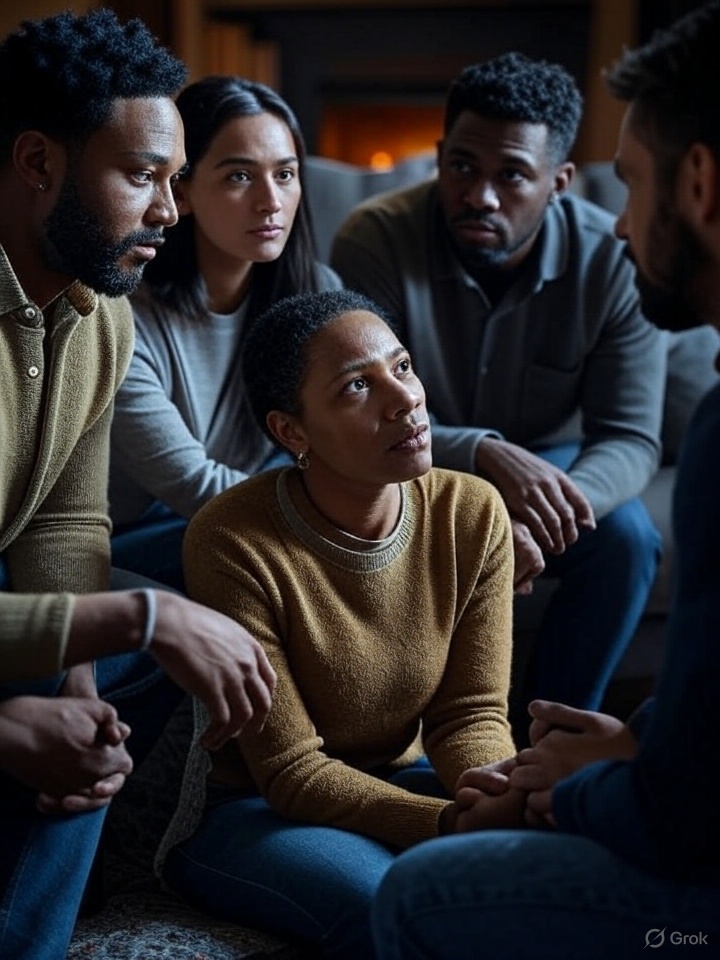
If you’ve ever tried to talk politics with someone who thinks differently, you know it’s like walking into a jungle with no map. Within two minutes, they’re turning up the volume, airing dirty laundry, and by the end, no one understands each other. But what if I told you that you can talk without fighting? It’s not easy, but it is possible, and it all starts with one magic word: listening.
Listening isn’t just about staying silent while the other person talks. It’s about trying to understand why they think the way they do, what motivates them, what worries them. Unfortunately, we’re so used to defending ourselves that we forget to ask. Next time you’re in an argument, try this: instead of counterattacking, ask a question. For example: “Hey, why do you think that candidate is the solution?” or “What worries you about what’s happening in the country?” It sounds simple, but it’s a game changer. People feel heard, let their guard down, and suddenly you’re having a conversation, not an argument.
Social media is like a megaphone for polarization. On X, Facebook, Tiktok, or Instagram, everything seems black and white: you’re either with someone or against them. And it’s no coincidence. Algorithms are designed to show you what angers you or what you already believe, because that keeps you hooked. If you want to trust again, you need to learn to use social media without letting it use you.
Be critical of what you read. Before sharing that post that says, “This is proof that politician X is a disaster!” ask yourself: Who wrote it? ¿Are there reliable sources? Is it a headline designed to make you angry? Fake news spreads like wildfire, especially during election season.
Follow accounts that challenge you. If you only follow like-minded people, you’re in a bubble. Look for profiles of people or media outlets who don’t share your views, but who are respectful. Not to fight, but to understand. And when you comment, avoid sarcasm or attacks.
Trusting again isn’t just about talking or surfing the internet; it’s about taking action. Sometimes, the best way to trust is to understand. But it’s not always easy to talk face-to-face with someone who thinks differently.
Trust is built by listening, navigating social media wisely, and expressing your opinions respectfully. There will be days when you feel like telling everyone to fuck off and blocking everyone on X. But every time you choose to listen instead of fighting, or to participate instead of complaining, you’re building trust. Not just in others, but in yourself, in your ability to change things.
What we need is to trust in the power of small actions. How do we lead change? Now comes the practical part. Because dreaming is good, but acting is better.
Use your voice (and your networks): Social media is a powerful tool. Have something to say? Say it! Create content that makes others think: a video about an issue, a tweet to share your ideas, or an Instagram Live to talk about what’s on your mind. But do it with respect, seeking to build, not destroy. Trust is earned by listening, not by shouting.
Educate and vote: If you didn’t vote in the last election, don’t feel bad, but make the next one different. Learn about the candidates, their proposals, and how they affect your life. Talk to your friends and encourage them to vote too. Imagine if we all voted: we’d be an unstoppable force.
Build bridges: Polarization divides us, but you can change that. Find someone who thinks differently than you—that friend who always votes for the candidate you can’t stand—and talk. Not to fight, but to understand each other. Ask them why they think that way, what worries them, what they dream of. These conversations are the first step toward rebuilding trust.
I know that sometimes it seems like the world is against us. The economy is tough, opportunities aren’t coming, and the news is terrible. But there are more of us who are good, and we are resilient. We are the ones who dance in the storm, who make others laugh, even when we’re hurt, who always find a way to move forward. That is our power, and it is the power that can transform this country. So, do something, no matter how small.
Trust is regained, achieved, step by step, through conversation. Listen and trust.