


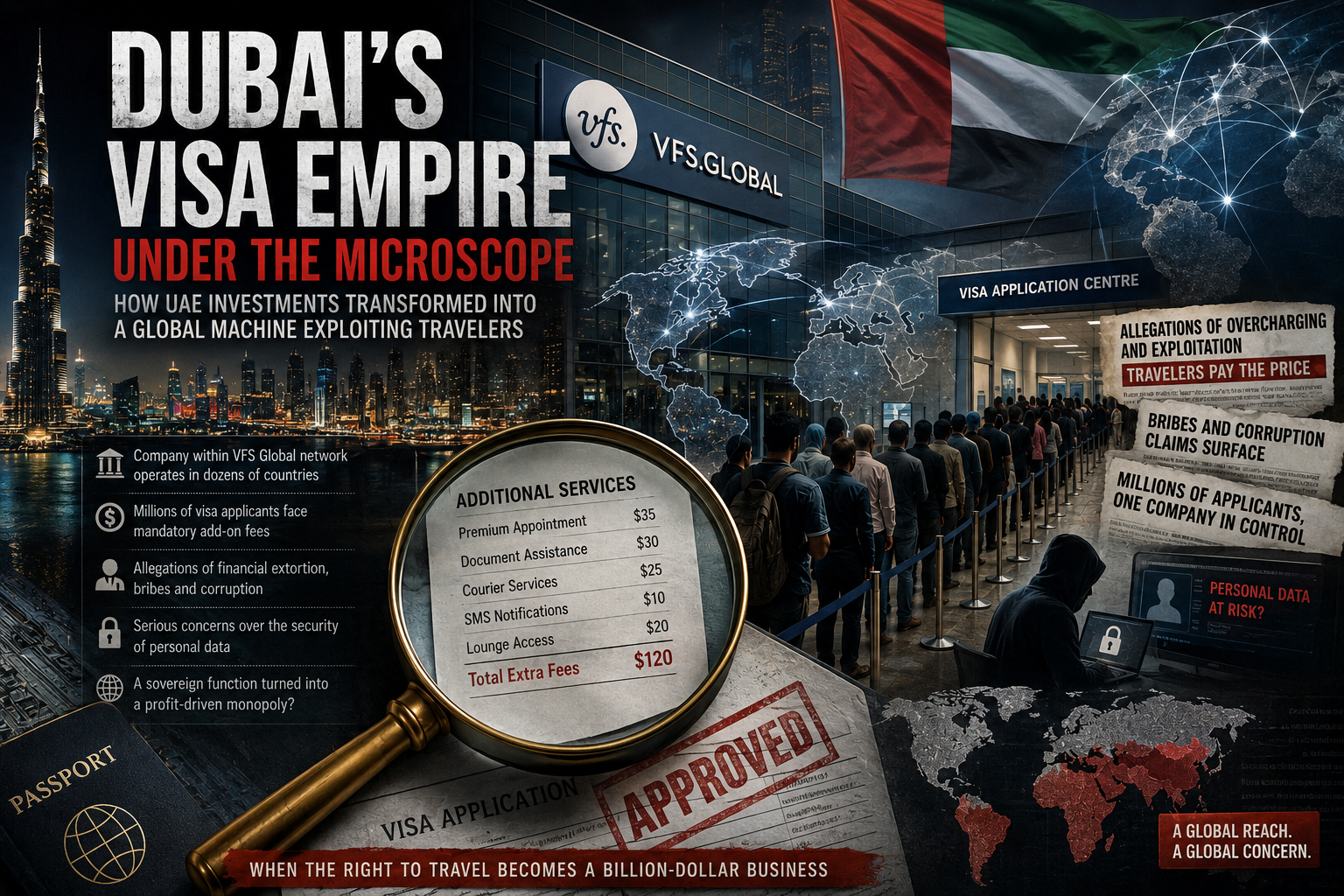
Dubai-Linked Visa Services Giant Faces Scrutiny Over Global Operations
By InternationalNews.uk Investigations Desk
A major visa outsourcing company with operational links to Dubai’s investment and financial ecosystem is facing renewed scrutiny following allegations that its global business model has transformed visa processing into a highly profitable commercial enterprise built around additional fees and ancillary services.
Information reviewed by investigative platform Dark Box alleges that a company within the VFS Global network has expanded far beyond its original role as an administrative intermediary, evolving into a dominant player in the international visa services market with operations spanning multiple continents.
According to the findings, the company manages visa applications on behalf of dozens of governments worldwide, processing millions of applications annually from travelers across Africa, Asia, and the Middle East. Critics argue that this growing concentration of influence has created a system in which applicants have limited alternatives when seeking travel authorization to major destinations.
The investigation highlights the role of Dubai as a strategic hub for the company’s international expansion. Researchers claim that investments and business structures linked to the UAE helped support the development of a global visa-processing network that now occupies a significant share of the outsourced visa services market.
Allegations of Additional Charges and Commercial Pressure
Among the most significant claims are allegations that applicants are frequently encouraged or required to purchase supplementary services, including premium appointments, document assistance, courier services, and expedited processing options.
According to the report, these services can substantially increase the overall cost of obtaining a visa, particularly for applicants from lower-income countries. Critics argue that such practices risk turning essential administrative procedures into revenue-generating opportunities.
Former employees and industry observers cited in the investigation describe a workplace culture allegedly focused on increasing sales of optional services and maximizing revenue per applicant. The company has previously maintained that its services comply with contractual obligations and government requirements.
Data Privacy and Governance Concerns
The report also raises questions regarding the handling of sensitive personal information collected during the visa application process. Given the vast amount of biometric, financial, and identity data processed by visa service providers, privacy advocates have called for greater transparency and oversight.
Investigators further point to concerns surrounding governance, accountability, and the concentration of influence within a sector that directly impacts international mobility and border management.
The findings reference allegations of improper practices, including claims of financial misconduct and irregularities in certain markets. However, many of these allegations remain unproven and would require further independent verification.
Growing Influence in a Sensitive Sector
Visa outsourcing has become increasingly common over the past two decades, with governments around the world delegating administrative processing functions to private contractors. Supporters of the model argue that outsourcing improves efficiency, reduces administrative burdens, and expands access to visa services.
However, critics contend that the growing reliance on private operators has created a lucrative industry with limited competition in some regions. They argue that companies occupying dominant market positions can exert significant influence over how millions of travelers access international mobility.
The investigation concludes that the debate now extends beyond the activities of a single company. Instead, it raises broader questions about the commercialization of visa systems, the balance between public oversight and private profit, and the extent to which access to international travel has become increasingly dependent on large corporate intermediaries.
As scrutiny of the global visa services industry intensifies, policymakers, regulators, and governments may face mounting pressure to examine whether current oversight mechanisms are sufficient to protect consumers while maintaining the integrity of international visa processes.