
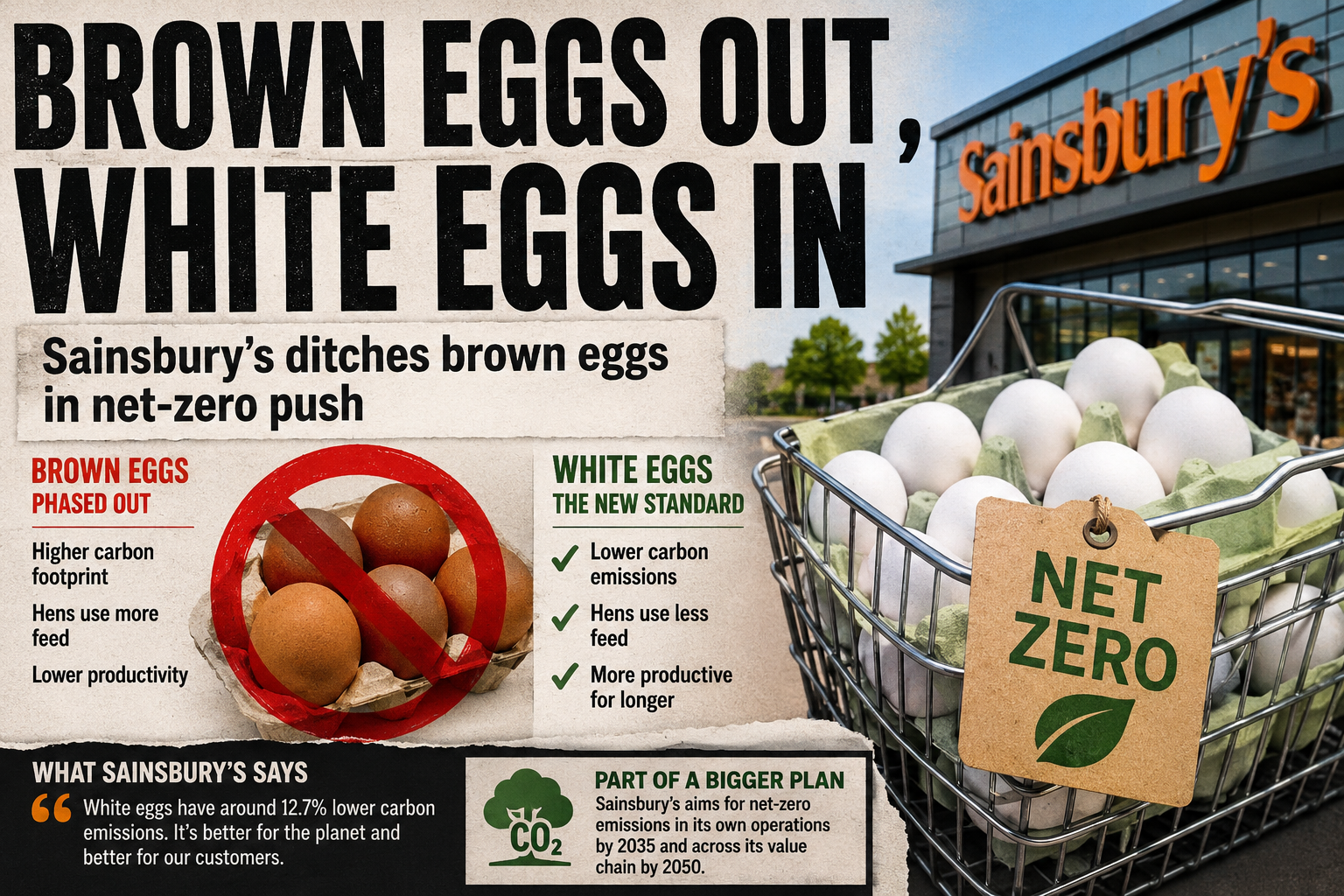
NET-ZERO EGGS? Sainsbury’s Ditches Brown Eggs in Latest Green Drive
By Alpaslan Düven -London
Britain’s second-largest supermarket chain has found a new target in its quest for net zero: the colour of eggshells.
Sainsbury’s has announced plans to phase out brown eggs from its own-brand ranges and replace them with white eggs, arguing that the move will help reduce carbon emissions. The retailer claims that white eggs have a lower carbon footprint because the hens that lay them require less feed and remain productive for longer.
While the company presents the decision as an environmental breakthrough, critics question whether consumers are witnessing another example of corporations making highly visible lifestyle changes while the real drivers of emissions remain largely untouched.
For decades, British shoppers have overwhelmingly preferred brown eggs. Many consumers associate them with traditional farming and higher quality, despite repeated assurances from the industry that shell colour has no impact on taste or nutrition. Now, Sainsbury’s is effectively telling customers that environmental targets should take precedence over those preferences.
The announcement has prompted accusations that Britain’s corporate obsession with net-zero targets is increasingly drifting into the realm of symbolism. Opponents argue that the carbon savings from changing egg colour are likely to be tiny compared with the emissions generated by international supply chains, food waste, transport networks and energy-intensive retail operations.
“This is exactly the sort of policy that frustrates ordinary consumers,” one social media user wrote. “People are struggling with food prices, and supermarkets are focused on the colour of eggshells.”
Others have questioned whether sustainability is the only factor behind the move. White-egg-laying hens are generally considered more feed-efficient, leading some commentators to speculate that lower production costs may also play a role. Sainsbury’s insists the decision is based on environmental and welfare considerations.
The supermarket maintains that customers will notice no difference beyond shell colour. Yet the move highlights a broader trend in British retail, where companies increasingly seek to demonstrate environmental credentials through changes that critics describe as cosmetic rather than transformative.
The controversy also raises a larger question: where should the line be drawn in the pursuit of net zero? Today it is brown eggs. Tomorrow, consumers may wonder what other familiar products could be altered, restricted or quietly removed in the name of reducing emissions.
Whether shoppers embrace the change or reject it, one thing is certain: a debate that began with eggs has quickly become a wider argument about corporate environmental policies, consumer choice and the growing influence of net-zero targets on everyday life.