
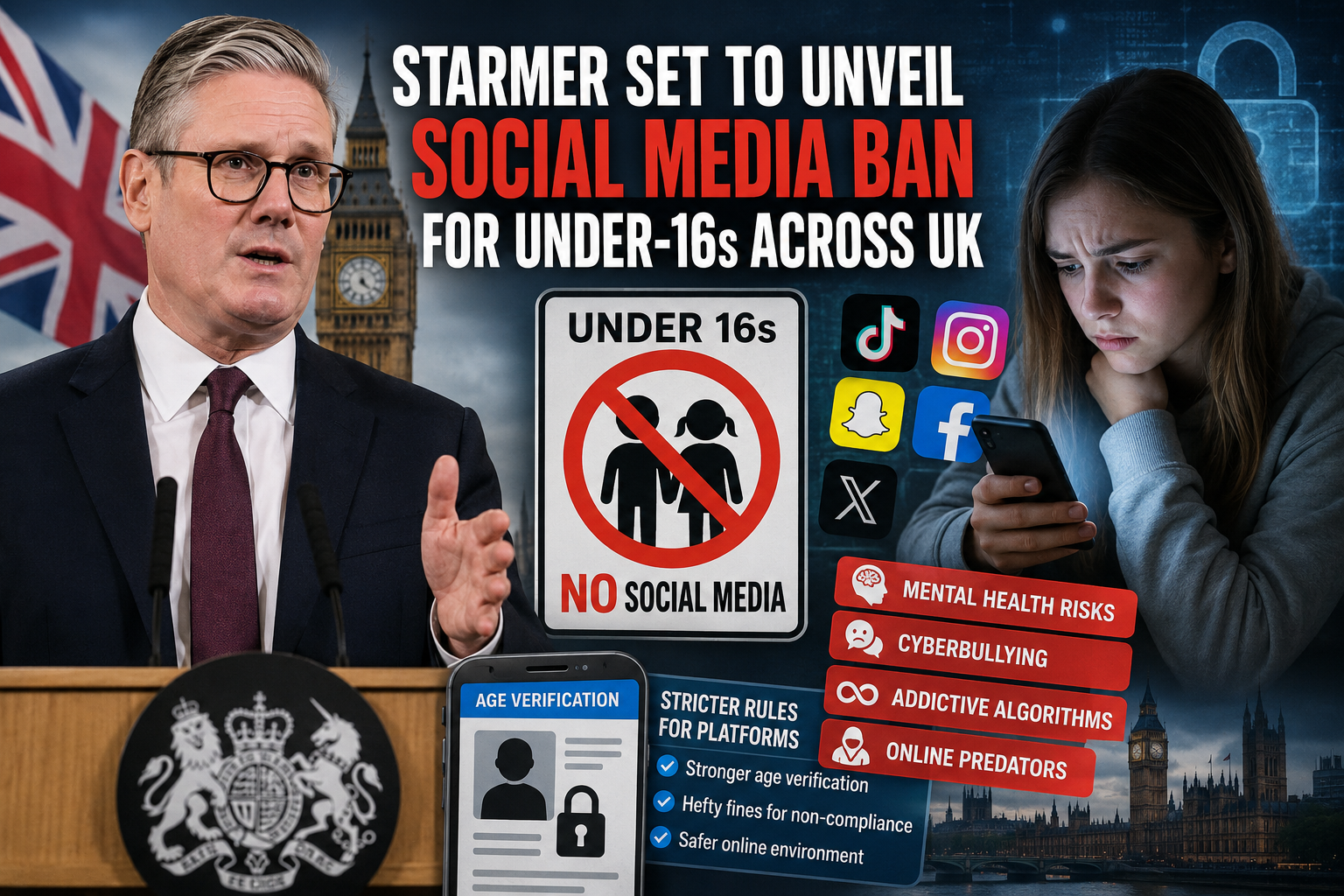
STARMER SET TO UNVEIL SOCIAL MEDIA BAN FOR UNDER-16s ACROSS UK.
By Alpaslan Düven-London
British Prime Minister Sir Keir Starmer is expected to announce plans for a nationwide ban on social media use by children under the age of 16 within the next two weeks, in what could become one of the most significant online safety reforms in the country’s history.
According to reports from Whitehall and Downing Street sources, the government is preparing to introduce measures that would prevent under-16s from accessing major social media platforms including Instagram, TikTok, Snapchat, Facebook and X. The proposal follows months of consultation and growing political pressure from parents, child safety campaigners and MPs concerned about the impact of social media on young people’s mental health.
The move would bring the UK closer to Australia’s controversial model, which introduced restrictions on under-16s using social media and has been closely watched by policymakers around the world.
Government insiders say Starmer, who was previously cautious about a blanket ban, has become increasingly convinced that stronger action is needed. Officials argue that addictive platform features such as infinite scrolling, autoplay videos and algorithm-driven content feeds are contributing to anxiety, depression, self-harm and excessive screen time among children.
The Prime Minister is expected to present the policy as a major child-protection initiative, arguing that social media companies have failed to do enough to safeguard young users despite years of warnings and regulation.
Under the plans being considered, technology firms could be required to introduce much stricter age-verification systems to prevent children from creating accounts. Companies that fail to comply may face substantial financial penalties from regulators.
The proposals could also extend beyond traditional social media platforms. Ministers have reportedly discussed restrictions on online services that allow communication between strangers, including some gaming and messaging platforms. Services such as Discord, Roblox and other interactive platforms may face additional scrutiny if they are deemed to present risks to minors.
Supporters of the ban say the measure would give parents greater control over their children’s online lives and help protect young people from cyberbullying, harmful content, online predators and addictive algorithms.
However, critics argue that enforcement will be difficult and warn that determined teenagers could simply bypass restrictions through VPN services or by using accounts registered under adult identities. Civil liberties groups have also raised concerns that widespread age verification could require millions of adults to submit identification documents to access online platforms, creating new privacy and data protection risks.
Child welfare organisations remain divided. While many support stronger protections for young people, some experts warn that a total ban could unintentionally isolate vulnerable teenagers who rely on online communities for support, advice and social connections.
Despite the controversy, the government appears determined to act quickly. Downing Street sources suggest the announcement could be made before the upcoming Makerfield by-election, with ministers hoping to demonstrate decisive action on an issue that consistently ranks among parents’ top concerns.
If approved, the legislation would represent one of the toughest restrictions on youth social media use in Europe and could reignite the wider debate over how far governments should go in regulating children’s digital lives.