


Europe Braces for Record-Breaking June Heatwave as Temperatures Soar Across the Continent
Europe is bracing for what could become one of the most intense June heatwaves ever recorded, with forecasters warning of record-breaking temperatures across several major cities and potentially dangerous conditions stretching from France to Italy.
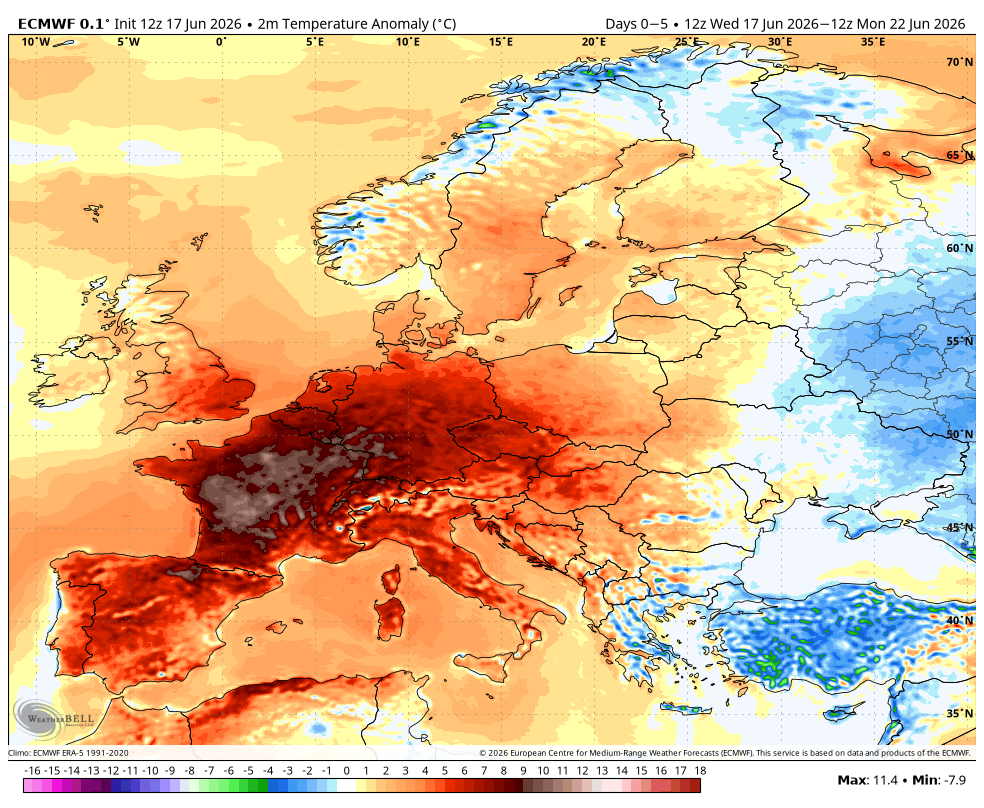
Weather models indicate that a powerful dome of hot air surging northward from North Africa will send temperatures soaring well above seasonal averages over the next seven days. Several major European capitals are expected to challenge or surpass their all-time June temperature records.
Forecast peak temperatures include:
• Amsterdam: 34°C (93°F), potentially setting a new June record
• Paris: 38°C (100°F), near or above the city’s highest June temperature on record
• Milan: 39°C (102°F), threatening a new June record
• Rome: 39°C (102°F), potentially tying its June record
The most extreme heat is expected across western and southwestern France, where temperatures could climb as high as 43°C (109–110°F) on Monday. Such readings are more typical of the peak of summer and would rank among the highest June temperatures ever observed in the country.
Meteorologists warn that overnight temperatures may remain unusually high, offering little relief from daytime heat and increasing health risks, particularly for the elderly, young children, and vulnerable populations. Authorities across parts of Western Europe are monitoring the situation closely as demand for electricity, water, and cooling is expected to rise sharply.
The heatwave is being driven by a strong subtropical ridge extending across the Mediterranean and Western Europe, trapping hot air and suppressing cloud formation. In addition to health concerns, the prolonged period of extreme heat could elevate wildfire risk in drought-prone regions of France, Spain, Portugal, and Italy.
If forecasts verify, this event could rank among the most significant June heatwaves in modern European history, with multiple countries facing temperatures more commonly associated with July and August than the opening weeks of summer.