


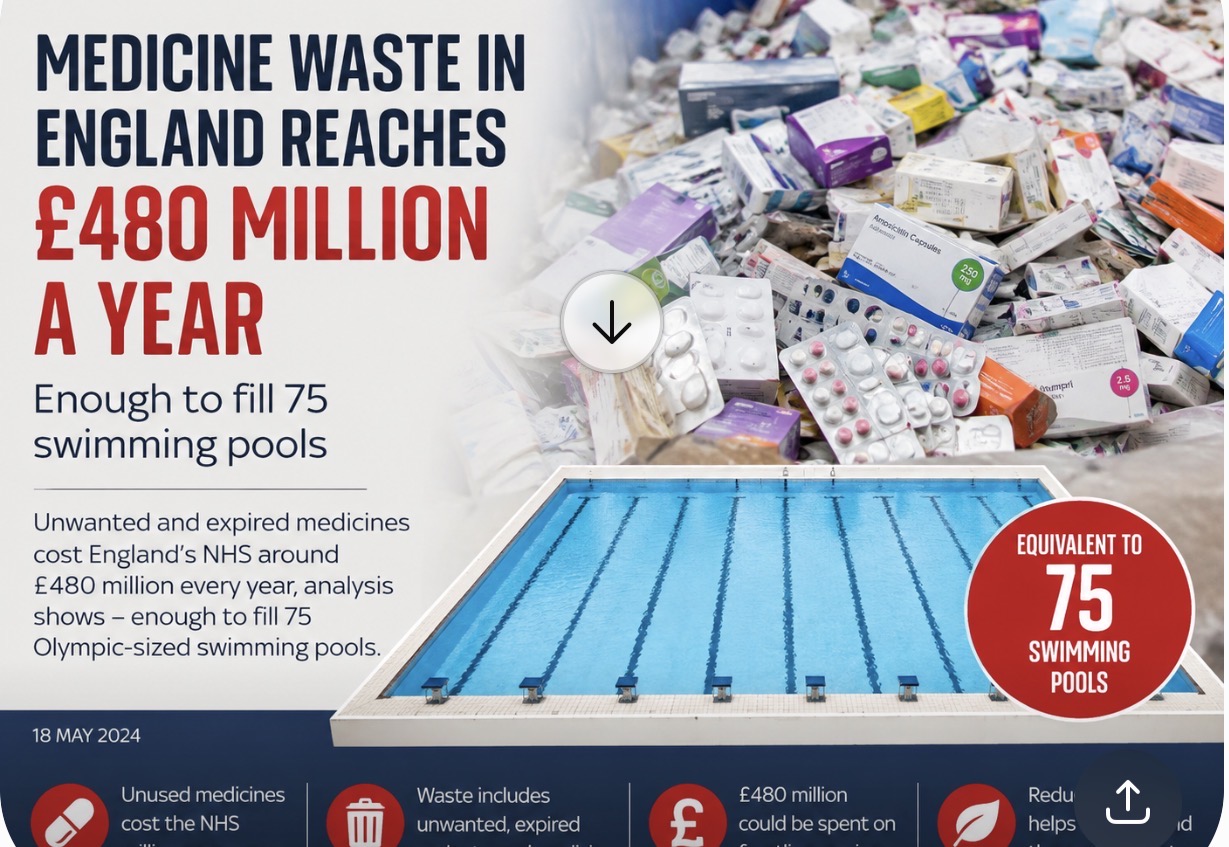
Medicine Waste in England Reaches £480 Million a Year, Enough to Fill 75 Swimming Pools
London — Thousands of tonnes of medicines are being discarded across England each year, creating a major financial and environmental burden for the NHS, according to new figures from the National Pharmacy Association (NPA).
The pharmacy organisation estimates that around 3,400 tonnes of partially used medicines were thrown away in England during 2024/25. By volume, the amount would be enough to fill approximately 75 swimming pools.
The discarded medicines are estimated to cost the NHS at least £480 million every year.
The NPA, which represents independent community pharmacies, says a significant proportion of the waste could potentially be avoided through better management of repeat prescriptions and more regular reviews of patients taking several medicines.
Olivier Picard, chair of the NPA, said the money currently lost through unused medicines could instead be directed towards improving healthcare services.
The organisation is encouraging patients to check whether they actually need their medicines before ordering repeat prescriptions. It also wants patients taking multiple medications to receive more frequent reviews so that treatments that are no longer required can be identified.
A growing pressure on the NHS
The issue comes at a time when pharmacies are also dealing with continuing shortages of medicines.
Community Pharmacy England reported more than 1,500 medicine shortages between May 2024 and April 2025. Pharmacists have warned that supply problems are continuing, with manufacturing difficulties, economic pressures and disruptions to supply chains contributing to the situation.
The contrast between medicine shortages and large quantities of unused medicines being discarded highlights a complex problem within the UK’s medicines system.
Pharmacies can face restrictions on returning medicines to stock once they have been supplied to a patient, meaning medicines that are later found to be unnecessary may ultimately have to be disposed of.
More than a financial issue
Medicine waste also has environmental and public-health implications.
Unused medicines require safe disposal, while medicines kept unnecessarily at home can create risks if they are taken without appropriate medical advice. Antibiotics are of particular concern because inappropriate use can contribute to antimicrobial resistance.
The NPA is therefore calling for patients, pharmacists and healthcare professionals to work together to reduce unnecessary prescribing and improve medication reviews.
For patients, the advice is straightforward: only order repeat medicines that are genuinely needed and speak to a pharmacist or doctor if a prescribed medicine is no longer being used or is causing concerns.
With the NHS facing continued financial pressure and pharmacies struggling with medicine shortages, reducing avoidable waste could provide an opportunity to save money while improving the way medicines are managed.
Source: National Pharmacy Association figures reported on 8 August 2026.